10 Best Physiotherapy Tools and Equipment for Clinics

A physiotherapy clinic depends on more than treatment expertise. The right equipment can support movement assessment, guided exercise, and comfortable hands-on care. Yet an impressive room is not automatically an effective one. Each item should serve a clear clinical purpose and suit the people who use it.

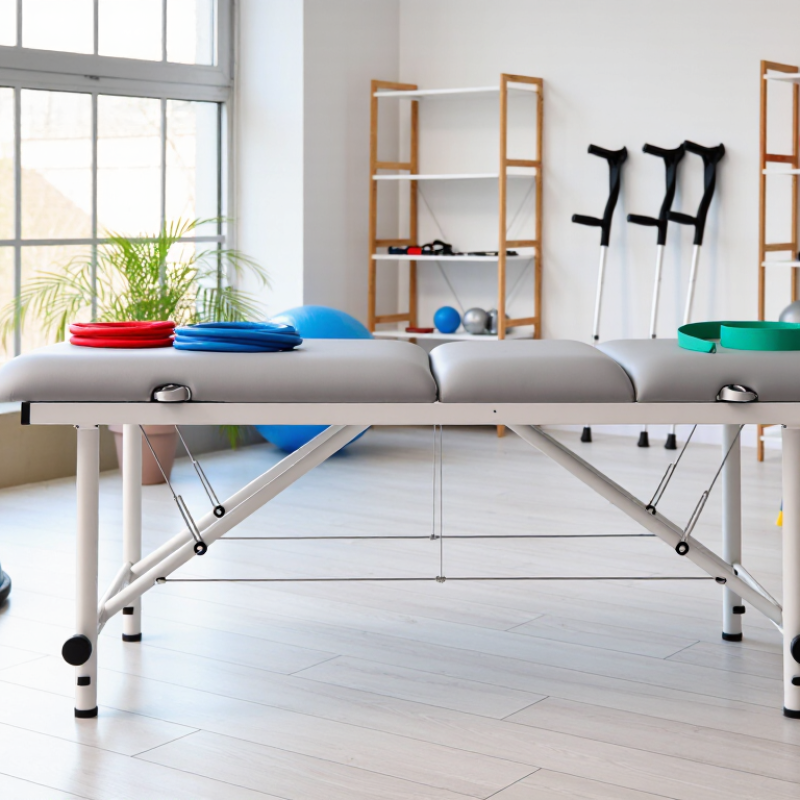
Physiotherapy Tools Equipment ranges from adjustable treatment tables and resistance bands to balance pads, exercise steps, and mobility aids. Small details matter. A table that adjusts smoothly can make positioning easier; bands with clear resistance levels can help clinicians adapt exercises. Equipment should be checked regularly, cleaned according to manufacturer guidance, and replaced when wear affects safe use. These practical steps are easy to overlook during a busy clinic day.

This guide explores ten useful options for clinics, with attention to function, patient needs, and everyday practicality. The best choice depends on the clinic’s services, available space, budget, and staff experience. A balance tool may be valuable in one setting and rarely used in another. That is worth remembering. Equipment does not replace clinical assessment or professional judgment, and no single purchase suits every patient. Comparing usability, durability, and maintenance needs can help clinics make more informed decisions—and avoid buying tools that look useful but gather dust.
10 Best Physiotherapy Tools and Equipment for Clinics

How Physiotherapy Equipment Supports Assessment and Rehabilitation

Physiotherapy equipment helps clinicians turn symptoms into observable findings and practical rehabilitation tasks. A goniometer can track joint range, while a handheld dynamometer records force during a controlled test. These measures are useful when repeated under similar conditions. A number alone cannot explain pain or daily function.

A stable treatment plinth supports movement testing and hands-on care. Resistance bands, light weights, steps, and balance pads let clinicians adjust exercises as a patient’s ability changes. For example, a low step can help assess stair control before supporting gradual practice. Equipment should match the person, not just the clinic’s routine. Poor setup can affect results; even small details, such as band slack, matter. I still find that simple tools sometimes reveal more than elaborate ones.

Tips: Check equipment for wear, stability, and cleanliness before use. Keep assessment conditions consistent, and record relevant settings or resistance. Ask how an exercise feels, then observe movement quality—not just repetitions. If pain or balance worsens, pause and reassess rather than pushing through.

10 Best Physiotherapy Tools and Equipment for Clinics — How Physiotherapy Equipment Supports Assessment and Rehabilitation

Common clinical roles of selected physiotherapy tools and equipment

This chart maps common clinical uses, not frequency or effectiveness. A value of 1 indicates a common role; 0 indicates that the item is not typically used for that purpose. Clinical use varies by patient and setting.

Which Tools Help Measure Movement, Strength, and Balance?

A clinic can measure movement with a goniometer, inclinometer, and measuring tape. These tools help record joint angles, spinal motion, and limb circumference. Keep the patient’s position consistent and note any pain or guarding. A reading can look precise, yet small changes in tool placement may affect the result. Repeat measurements when they seem unexpected.

Strength testing can combine manual muscle testing with a handheld dynamometer. The dynamometer records force, while resistance bands or weights help observe functional control during specific tasks. Record the tested position, side, and effort level. Patient effort varies, so one number should not tell the whole story. Context matters.

Balance can be assessed with a stopwatch, balance pad, or force-measuring platform. A simple single-leg stance may reveal differences between sides; keep a chair nearby for safety. Video can help review stepping patterns, but camera angle and clothing may hide details. Small details matter. These tools support clinical judgment, not replace it. I would be cautious about treating a single test as a complete picture of someone’s movement.

What Are the 10 Core Tools Used in Physiotherapy Clinics?

A well-equipped physiotherapy clinic needs practical tools for assessment and graded exercise. An adjustable treatment table supports examinations and hands-on care. Exercise mats provide a stable surface for floor exercises. Resistance bands and light dumbbells allow patients to build strength in small steps. Therapy balls help train trunk control, while balance pads or boards challenge stability. A low step platform supports stair and stepping practice.

For measuring progress, a goniometer helps assess joint range of motion, and a handheld dynamometer can record muscle force. Heat and cold packs may offer short-term comfort when clinically appropriate. These tools do not replace a careful assessment or a tailored plan. Not every clinic needs everything. Patient needs, available space, cleaning routines, and staff training should guide purchases. In practice, equipment can be overlooked or poorly adjusted; regular checks help keep sessions safe and useful.

Tips: Keep frequently used items within reach, and clean shared surfaces between patients. Check bands for cracks and measuring tools for accuracy. Start balance tasks near a sturdy support, then adjust difficulty to the patient’s control and confidence.

How Clinics Match Equipment to Treatment Goals and Patient Needs

A clinic’s equipment should follow its treatment goals, not a catalogue trend. The World Health Organization estimates that 2.4 billion people live with conditions that may benefit from rehabilitation (WHO, Rehabilitation fact sheet, 2023). That scale calls for adaptable tools: adjustable plinths, resistance bands, steps, balance pads, and walking aids support different tasks without requiring a machine for every diagnosis. Fit matters. For a patient rebuilding stair confidence, a low step and handrail may be more relevant than a large strength machine. For post-operative knee rehabilitation, a plinth, measured resistance, and a simple range-of-motion tool can help clinicians track progress.

Patient needs also include pain, fatigue, balance, mobility, and confidence. WHO’s 2022 Global report on health equity for persons with disabilities estimates that 1.3 billion people experience significant disability. This reinforces the value of accessible layouts and equipment that adjusts for height, transfer ability, and support needs. A hand-held dynamometer can record force changes; a gait belt can support supervised mobility practice. Choose tools that answer a clinical question, and reassess their usefulness as the plan changes. More equipment does not automatically mean better care. A quiet corner, clear floor space, and a stable chair can matter just as much. Clinics may still overbuy. Regularly reviewing what patients actually use can expose that mistake.

10 Best Physiotherapy Tools and Equipment for Clinics — How Clinics Match Equipment to Treatment Goals and Patient Needs
Equipment Common Treatment Goals Patient Needs It May Suit How Clinics Can Match It to Care Key Clinic Considerations
Adjustable treatment plinth Support positioning, hands-on assessment, assisted movement, and exercise. Patients who need a stable surface for examination or supported treatment, including those with limited mobility. Choose an adjustable height and suitable access features based on the clinic’s patient population and treatment methods. Check weight capacity, stability, transfer access, and cleaning requirements. Use appropriate assistance for transfers.
Resistance bands and tubing Provide adjustable resistance for strengthening and movement-control exercises. Patients who need portable, graded resistance or exercise options that can be adapted to different ability levels. Offer varied resistance levels and select exercises according to the patient’s strength, control, and treatment plan. Inspect regularly for wear or damage. Teach safe anchoring and controlled movement; bands are not suitable for every exercise or patient.
Free weights and dumbbells Support progressive resistance exercises for upper- and lower-limb strength. Patients able to perform loaded movements with appropriate technique and supervision. Stock a practical range of loads so therapists can adjust resistance to the exercise and the patient’s current capacity. Provide clear storage and handling procedures. Monitor lifting technique and select loads appropriate to the individual.
Balance pad or wobble board Provide a less stable surface for balance, coordination, and movement-control practice. Selected patients working on balance or lower-limb control who can safely attempt the activity. Match surface stability and task difficulty to the patient’s assessed balance and ability to follow instructions. Use a clear area and suitable guarding or support. Begin with safer, more stable tasks when fall risk is a concern.
Stationary exercise cycle Support repeated lower-limb movement and cardiovascular conditioning. Patients who can use a cycle safely and benefit from adjustable, low-impact exercise. Consider seat and handlebar adjustment, step-through access, resistance settings, and the patient’s exercise tolerance. Check safe mounting and dismounting, fit, and equipment condition. Set exercise intensity according to clinical assessment.
Treadmill Support gait practice, walking endurance, and graded walking exercise. Patients who can walk safely on a moving belt, with assistance or safety features where appropriate. Assess walking ability, balance, speed tolerance, and need for supervision before selecting treadmill-based practice. Use accessible controls and an emergency stop. Provide close supervision when indicated and keep the surrounding area clear.
Parallel bars Provide hand support for standing, balance tasks, and early gait practice. Patients who need stable external support while practising upright movement or walking steps. Match bar height and spacing to the patient and the intended task; use therapist assistance based on assessed needs. Ensure secure installation, adequate clear space, and safe entry and exit. Bars support practice but do not replace supervision.
Electrical stimulation unit Deliver electrical stimulation for selected clinical applications, such as muscle activation or pain management. Patients for whom a qualified clinician has identified an appropriate indication and checked relevant precautions. Choose a device with controls and treatment options suited to the clinic’s intended applications and staff training. Screen for contraindications and precautions, follow the device instructions, and check skin and electrode placement as appropriate.
Therapeutic ultrasound unit Deliver ultrasound energy as an adjunct modality in selected treatment plans. Patients for whom a trained clinician considers the modality appropriate after assessment. Base use on clinical rationale, treatment area, and patient-specific precautions rather than using the modality routinely. Follow device guidance and professional standards. Screen the treatment area and relevant precautions before use.
Hot and cold therapy packs Provide localized heat or cold as a comfort measure or adjunct to a broader care plan. Selected patients who can safely tolerate temperature-based treatment and communicate discomfort. Choose the type and application method according to the patient’s goals, skin condition, sensation, and clinical assessment. Use a protective barrier and check the skin and sensation as appropriate. Avoid unsupervised application when the patient cannot report discomfort reliably.

How to Maintain Physiotherapy Equipment and Use It Safely

Physiotherapy equipment stays safer when checks become part of the clinic routine. Before each session, inspect treatment tables for loose joints, torn upholstery, or unstable legs. Check resistance bands for small cracks, and discard any that feel brittle or stretched unevenly. Look closely at cable connections and electrode leads. Stop using damaged equipment.

Small faults matter. A slipping table or frayed lead can interrupt treatment or cause injury. Follow the manufacturer’s instructions for cleaning and servicing each device. Unplug electrical equipment before cleaning when the instructions require it, and never soak controls or connectors. Use clinic-approved disinfectants and allow surfaces to dry before the next patient.

After treatment, clean shared contact surfaces, including table edges, handles, and balance pads. Store bands and weights away from heat and direct sunlight. Keep floors clear of loose cables, and position equipment so patients can enter and leave safely. Record inspections, cleaning, and repairs; brief notes can reveal recurring problems. Routine records are easy to neglect, especially on busy days.

Set regular maintenance checks for powered devices, and arrange service when readings seem inconsistent or a unit behaves unusually. Staff should know how to adjust equipment and explain its use before a patient begins. A quick demonstration helps, but it does not replace supervision. I still find that rushed handovers leave questions unanswered, so make space for them.

Lumenis logo