10 Essential Tips for Effective Photorejuvenation Techniques

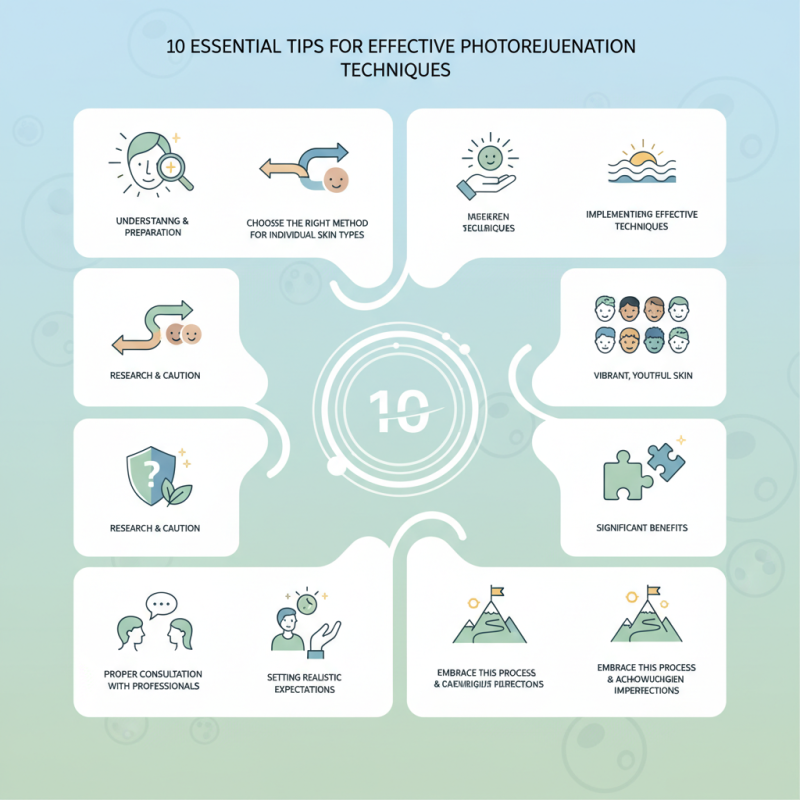
Photorejuvenation is a popular technique in skincare, known for its ability to enhance appearance. Many individuals seek vibrant, youthful skin. However, successful photorejuvenation requires understanding and preparation.

Implementing effective techniques can boost results. It's essential to choose the right method for individual skin types. Not all treatments suit everyone. Some may experience side effects or dissatisfaction. This highlights the importance of research and caution.

Proper consultation with professionals is crucial. They can provide tailored advice based on unique needs. Photorejuvenation can offer significant benefits, but it's vital to set realistic expectations. Every journey to enhanced skin has its challenges. Embracing this process means acknowledging imperfections while striving for improvement.
10 Essential Tips for Effective Photorejuvenation Techniques

Understanding Photorejuvenation: An Overview of Techniques
10 Essential Tips for Effective Photorejuvenation Techniques

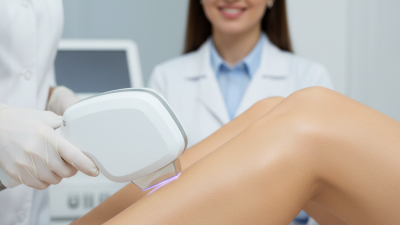
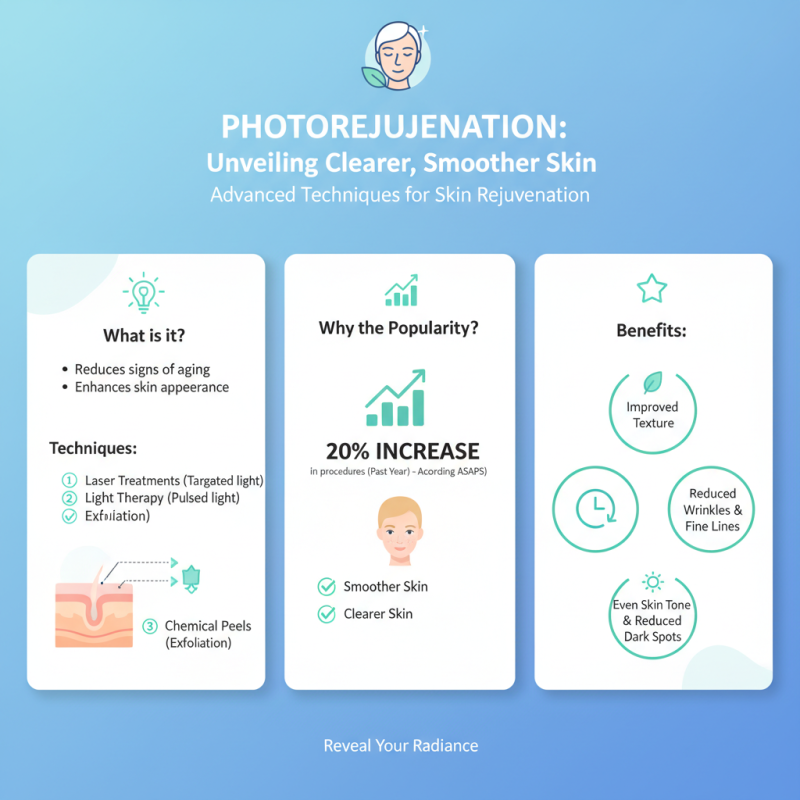
Photorejuvenation is a popular method for enhancing skin appearance. It utilizes various techniques to reduce signs of aging. These may include laser treatments, light therapy, and chemical peels. According to the American Society for Aesthetic Plastic Surgery, photorejuvenation procedures increased by 20% in the past year. Patients seek these methods for smoother, clearer skin.

Different technologies cater to diverse skin needs. Laser treatments address pigmentation and wrinkles effectively. Light therapy promotes collagen production, making skin firmer. Chemical peels can improve skin texture but may require recovery time. A report by the International Society of Aesthetic Plastic Surgery indicated that non-invasive procedures like these represent about 60% of all cosmetic treatments.

However, not every experience is perfect. Patients may encounter side effects like redness or swelling. Results can vary significantly, often influenced by skin type and condition. It's crucial to have a comprehensive consultation with a qualified professional. Keeping realistic expectations is vital to avoid disappointment. Individual experiences can differ, and ongoing research continues to improve techniques and outcomes.
Key Considerations Before Starting Photorejuvenation Treatments

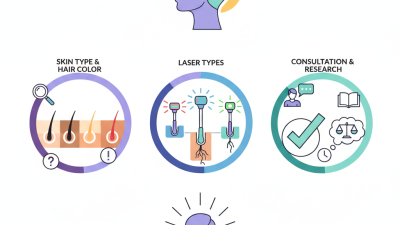
Before delving into photorejuvenation treatments, it's essential to reflect on specific factors. Your skin type matters significantly. Different skin types react uniquely to various techniques. Understanding your skin can prevent unexpected reactions and ensure better results. Consult a dermatologist to identify your skin type accurately.

Another critical aspect is to set realistic expectations. Photorejuvenation can improve skin texture and tone. However, it may not yield the miraculous results you envision. Some clients report only modest changes. It’s vital to embrace the process and appreciate small improvements. Be patient with yourself and the treatment.

Finally, consider your overall health and wellness. Certain conditions may influence treatment efficacy. A balanced diet and proper hydration can enhance results. Reflecting on your lifestyle choices is necessary before starting. This helps you align your goals with what photorejuvenation can genuinely achieve.

Popular Photorejuvenation Techniques and Their Benefits

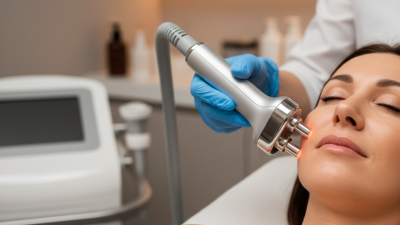
Photorejuvenation techniques are gaining popularity for their ability to reduce signs of aging. Treatments like laser therapy and intense pulsed light (IPL) are widely used. Each method offers unique advantages, targeting issues such as fine lines, sun damage, and uneven skin tone.

One effective tip is to choose a method that suits your skin type. For example, darker skin might react differently to laser treatments than lighter skin. Always consider your specific needs and consult with a professional. Keep in mind that not every treatment works for everyone. Results may vary; patience is essential.

Another important aspect is the aftercare involved. Hydrating your skin post-treatment can enhance results. However, some individuals find it challenging to adhere to skincare routines. It's crucial to listen to your skin. If irritation occurs, reevaluate your aftercare products. Making notes on what works and what doesn’t can be very helpful, leading to better outcomes in the long run.

10 Essential Tips for Effective Photorejuvenation Techniques

Aftercare Strategies for Optimal Results in Photorejuvenation

10 Essential Tips for Effective Photorejuvenation Techniques

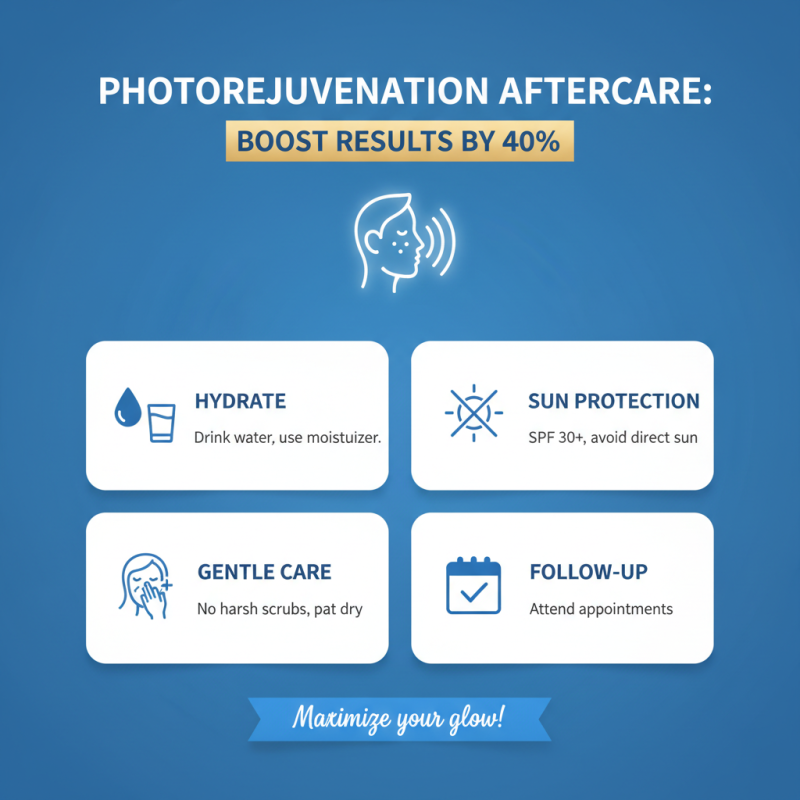
Photorejuvenation is a popular way to enhance skin appearance. However, aftercare is crucial for achieving the best results. Studies show that proper aftercare can increase treatment efficacy by up to 40%. It helps skin recover and maximizes the benefits of the procedure.

One key aftercare strategy is to avoid sun exposure. UV rays can reverse the benefits of photorejuvenation. Use a broad-spectrum sunscreen daily, even on cloudy days. Apply it generously. Reapply every two hours when outdoors. Hydration is also vital. An appropriate moisturizer helps retain skin moisture and promotes healing.

Another aspect to consider is follow-up care. Regular check-ins with your skincare provider can ensure that your skin is responding well to the treatment. It may take time for the true effects to manifest. In some cases, patients notice changes but aren't fully satisfied. Documenting your skin's journey can help you target areas needing improvement.

Listening to your skin is essential. If irritation occurs, consult with a professional. Sometimes, less is more. Balancing active treatment with gentle care is important. Too much product can overwhelm freshly treated skin. Remember, outcomes vary. Each person’s skin reacts differently, and patience is necessary.

Common Myths and Misconceptions About Photorejuvenation

Photorejuvenation is often surrounded by misconceptions. Many believe it is a "one-size-fits-all" treatment. In truth, results vary significantly based on skin type and condition. According to a study by the American Society for Dermatologic Surgery, individual skin reactions can differ by up to 40%. This variability shows not everyone enjoys the same outcome.

Another popular myth is that photorejuvenation is a painful procedure. Most patients report minimal discomfort. A recent survey indicated that over 70% of participants found the procedure more comfortable than expected. However, it's essential to set realistic expectations. Immediate results are rare; significant improvement takes time.

People often confuse photorejuvenation with laser resurfacing. While both aim to improve skin appearance, their mechanisms differ. Laser treatments can often lead to longer recovery times. In contrast, photorejuvenation requires no downtime, yet it may require multiple sessions for optimal results. Understanding these differences is crucial. Misunderstanding breeds unrealistic hopes and disappointment.

10 Essential Tips for Effective Photorejuvenation Techniques

Tip Description Common Myths
1. Understand Your Skin Type Consult a dermatologist to identify your skin type for tailored treatment. Myth: All skin types respond the same to photorejuvenation.
2. Schedule a Consultation A professional consultation can help set realistic expectations. Myth: You can find all the information online without expert advice.
3. Use Sun Protection Always apply sunscreen to protect your skin before and after treatment. Myth: Sun exposure is fine during photorejuvenation.
4. Hydrate Your Skin Keep your skin moisturized to enhance treatment results. Myth: Moisturizers are unnecessary after treatment.
5. Multiple Sessions Required Most individuals benefit from a series of treatments for best results. Myth: One session is enough for noticeable change.
6. Post-Treatment Care Follow post-treatment instructions for optimal healing and results. Myth: There is no special care needed after treatments.
7. Be Patient Results take time; give your skin proper time to heal. Myth: Immediate results are expected after every session.
8. Explore Different Techniques Research various photorejuvenation techniques to find what suits you. Myth: All photorejuvenation methods work the same way.
9. Realistic Outcome Expectations Understand the realistic outcomes and set goals accordingly. Myth: Photorejuvenation can completely reverse aging.
10. Seek Qualified Professionals Always seek treatment from trained and certified practitioners. Myth: Anyone can perform photorejuvenation treatments safely.
Lumenis logo