Top Grain Semi Trailer Manufacturers in China?

Choosing among the top Grain Semi Trailer manufacturers in China requires more than comparing prices or polished factory photographs. A reliable evaluation starts with the work the trailer must perform: the grain type, expected payload, route length, loading method, and unloading conditions. These details shape practical choices, including body volume, steel thickness, axle configuration, suspension, and discharge design. Small differences matter. A poorly matched outlet can slow unloading, while weak surface protection may shorten service life in demanding conditions.

This guide examines manufacturers through verifiable details: product specifications, production capabilities, quality-control practices, customization options, and after-sales support. Buyers should request drawings, material information, and clear warranty terms, then compare those records against the intended operating conditions. A confident sales claim is not the same as evidence. Factory visits, sample documentation, and direct technical questions can reveal gaps that brochures leave out. The comparison also recognizes that the lowest quoted price may not represent the lowest total cost.

A named expert quotation was not supplied with the source material, so this introduction does not invent one or attribute unverified words to a real person. Instead, it uses a practical engineering principle: “Match the trailer to the grain, route, and unloading system—not to the brochure.” That is a guide, not a verified quotation. The following overview offers a grounded starting point for assessing Grain Semi Trailer manufacturers in China, while leaving room for buyers to verify each supplier’s claims independently.
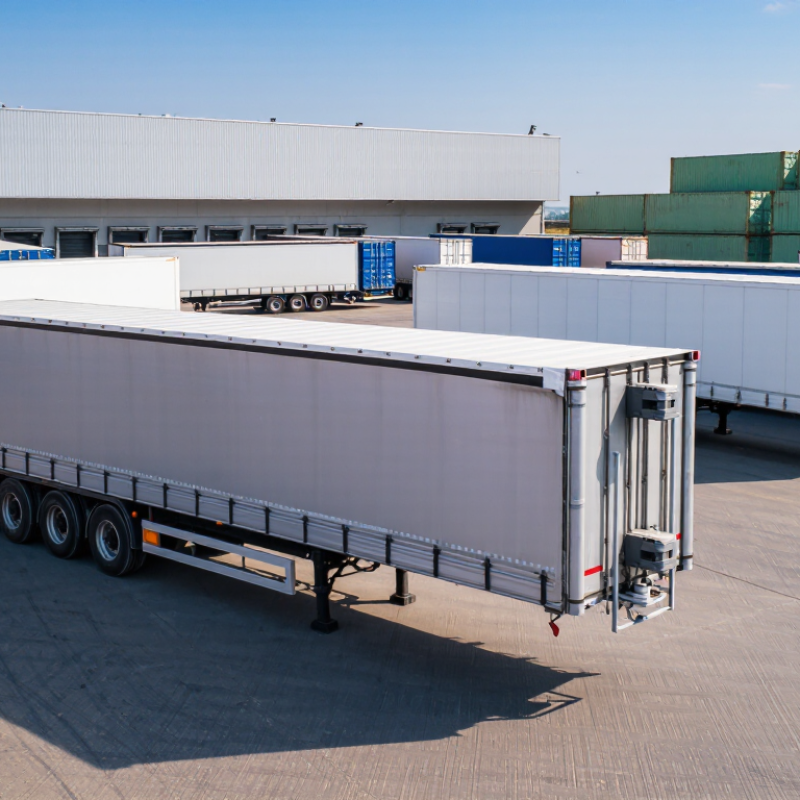
Top Grain Semi Trailer Manufacturers in China?

What Is a Grain Semi Trailer and How Is It Used?

A grain semi trailer is a road vehicle designed to carry loose agricultural products such as wheat, corn, and barley. Its enclosed body helps shield cargo from rain, road dust, and debris during transport. Many models use several bottom discharge gates, while others tip the body to unload. The right arrangement depends on the receiving site and how grain is handled there.

Keep it dry. Before loading, operators should check that the floor, seals, and discharge points are clean and free of leftover material. Even a small amount of moisture or residue can affect a new load. Grain is often loaded through an opening at the top, then distributed to avoid uneven weight. That step matters: a lopsided load can make handling less stable.

At delivery, gravity-fed gates can release grain into a pit or conveyor, reducing manual handling. A tipping body may suit sites with suitable space and equipment, but it needs careful operation on firm, level ground. Not every facility can use every trailer. Capacity, axle layout, body material, and cleaning access all deserve attention when choosing one. In daily use, simple details—like a gate that sticks or a hard-to-reach corner—can slow a delivery. Specifications help, but real loading and unloading conditions should guide the choice.

What Is a Grain Semi Trailer and How Is It Used?

A grain semi trailer is designed to transport loose bulk crops, typically from farms to grain elevators, mills, or ports. The chart estimates the volume required to carry 30 metric tonnes of each grain, using representative bulk-density values. Actual density varies with crop variety, moisture, and handling.

Estimated cargo volume (m³); calculations use representative bulk densities: wheat 770, maize 720, soybeans 750, barley 620, and paddy rice 560 kg/m³.

Key Designs and Specifications of Grain Semi Trailers

Key Designs and Specifications of Grain Semi Trailers

A grain semi trailer needs to protect loose cargo while allowing fast, controlled unloading. Common designs use a rectangular steel or aluminum body with tall side panels and a rear discharge gate. Some models tilt to empty the load; others use gravity-fed outlets. The right layout depends on grain type, loading equipment, and the receiving site. Small details matter.

Check the body’s usable volume, rated payload, axle arrangement, and tare weight together. A larger box is not always better: grain is dense, and weight limits can be reached before the trailer is full. For a practical comparison, request a dimensioned drawing showing internal length, width, sidewall height, and outlet position. Ask how the stated capacity was calculated. It may assume a specific grain density.

Seals around doors and floor joints help limit leaks and moisture entry. A fitted tarp, reinforced crossmembers, corrosion-resistant fittings, and accessible ladder points also deserve attention. Look closely at weld consistency and door latches; small gaps can leave grain behind. Measure twice. Ask for the axle, suspension, and braking specifications in writing, then compare them with your tractor and operating routes. A clean exterior tells you little about hidden structural quality.

Top Grain Semi Trailer Manufacturers in China? - Key Designs and Specifications of Grain Semi Trailers
Typical design options and specification ranges for grain-hauling semi trailers. Actual capacities and dimensions vary by configuration, local regulations, cargo density, and operating conditions.
Design / Specification Typical Configuration Key Characteristics Common Considerations
Hopper-bottom grain trailer Typically 2 or 3 hoppers, with bottom discharge gates Gravity unloading; suitable for facilities with receiving pits or conveyors; often fitted with hopper covers. Gate dimensions and outlet spacing should match the receiving system. Keep outlets sealed against moisture and grain loss.
End-dump grain trailer Single tipping body operated by a hydraulic hoist Can unload quickly at suitable dump sites; body may have high sides to increase volume. Requires firm, level ground and adequate overhead clearance. Tipping stability and hoist capacity are important safety factors.
Walking-floor grain trailer Enclosed body with a hydraulically powered moving floor Unloads without raising the body; useful where overhead clearance is limited or tipping is unsuitable. Floor slat condition, hydraulic system maintenance, and compatibility with the cargo are key considerations.
Body length Often approximately 10–13.7 m, depending on axle layout and market regulations Longer bodies can provide more volume but may affect maneuverability and axle-load distribution. Confirm permitted overall length and coupling dimensions for the intended route and tractor unit.
Body volume Commonly about 40–70 m³, depending on body dimensions and side height Volume should be selected for the expected grain type and the vehicle’s legal payload. Grain bulk density varies by crop and moisture content; a large body does not necessarily mean it can be legally filled to capacity.
Payload and gross vehicle weight Determined by trailer tare weight, axle configuration, tractor, and local weight limits Payload ratings are configuration-specific rather than universal. Check axle-group limits, tire ratings, suspension ratings, and applicable road regulations before loading.
Axle configuration Typically 2 or 3 axles; suspension may be mechanical or air Axle count and spacing influence load distribution, turning behavior, and regulatory compliance. Specify brake type, axle ratings, suspension, and wheel configuration for the intended tractor and operating region.
Body material and structure Steel or aluminum construction, selected according to duty and weight requirements Steel is commonly used for robust service; aluminum can reduce tare weight when properly designed for the application. Consider corrosion protection, floor wear, repairability, and the effect of material choice on tare weight.
Grain protection and sealing Weather-resistant cover system, sealed joints, and protected discharge openings Helps limit exposure to rain, dust, and contamination during transport. Inspect covers, seals, and gates regularly; a cover does not replace proper cleaning and cargo handling.
Braking and safety equipment Service brakes, parking brake, lighting, reflectors, and required anti-lock braking equipment Equipment requirements depend on the applicable vehicle regulations and intended market. Verify legal compliance, brake compatibility with the tractor, and inspection requirements before use.
Note: Figures shown are indicative industry ranges, not guaranteed ratings. Confirm the final design, certified weights, and applicable road requirements with the trailer supplier and relevant authorities.

Leading Grain Semi Trailer Manufacturers in China

Leading grain semi trailer manufacturers in China build equipment for moving bulk crops from farms, storage sites, and processing facilities. A useful design starts with the cargo: wheat, corn, and rice flow differently, especially when moisture levels vary. Hopper angles, outlet size, and internal surfaces affect how cleanly grain unloads. Small details matter. A narrow corner can hold kernels after discharge, while a poorly sealed cover may admit rain or road dust.

When comparing manufacturers, buyers should review steel specifications, weld finish, axle ratings, and corrosion protection against the intended operating conditions. Ask for dimensional drawings and clear maintenance guidance. If possible, inspect a finished trailer and watch the discharge process. A neat brochure is not proof. Manufacturing quality can vary between production runs, so one visit may not tell the whole story. It is also worth checking whether spare parts are readily available and whether the manufacturer can explain inspection procedures without vague promises. A trailer that looks strong in a yard may behave differently on uneven roads or during repeated loading cycles.

How Chinese Manufacturers Compare in Quality and Production

Top Grain Semi Trailer Manufacturers in China?

Comparing Chinese grain semi-trailer manufacturers takes more than checking catalog prices. Quality depends on material control, welding consistency, axle alignment, and the finish inside the cargo body. Ask for steel certificates and inspection records. Then check whether those records match the trailer being offered.

Production capacity matters, but a large workshop does not guarantee steady results. Look for organized cutting and welding stations, documented quality checks, and clear delivery schedules. A useful factory visit includes examining weld seams, door seals, floor joints, and paint coverage under bright light. Details show.

Request evidence of load testing and road trials, plus a clear explanation of how defects are handled. Compare specifications carefully: body volume, tare weight, suspension, braking components, and discharge design can differ even when trailers look similar. Independent inspections can help verify claims before shipment. Paperwork alone is not enough.

The comparison is not always neat. Some factories may offer strong customization but need longer lead times; others may deliver faster with fewer configuration options. Ask for production timelines based on the exact design, not a standard model. Sample photos help, but they cannot replace checking materials and workmanship on the finished trailer.

What to Check When Choosing a Chinese Grain Trailer Supplier

When comparing Chinese grain trailer manufacturers, begin with the work the trailer must do. Share your grain type, expected payload, loading method, and typical road conditions. Ask for the trailer’s internal dimensions, discharge design, axle configuration, and tare weight in writing. Details matter. A few centimeters can affect loading, while poorly placed discharge openings may leave grain trapped in corners.

Check how the supplier controls materials and fabrication. Ask for steel grades, weld inspection procedures, coating steps, and records from recent production. If possible, inspect a finished trailer or request clear photographs of the chassis, welds, and hopper seams. A smooth paint finish can hide rough work underneath. It is not proof of durability. Ask what inspections happen before shipment and how defects are documented.

Compare the quotation with the drawings and technical specifications, not just the headline price. Confirm which components are included, how spare parts are identified, and what support is available after delivery. Request references from buyers using similar trailers, then ask about maintenance needs and actual loading performance. Communication is also a practical test: vague answers about capacity or repair parts deserve follow-up. Even careful checks cannot predict every problem, so record agreed specifications and tolerances before production begins.

Lumenis logo