2026 Top Q Switched Nd Yag Laser for Global Buyers

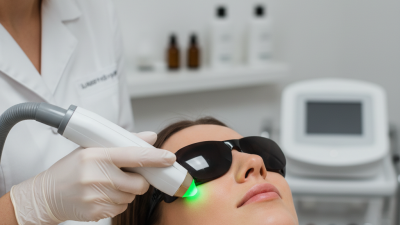
The 2026 Top Q Switched Nd Yag Laser for Global Buyers guide examines performance, safety, and supplier reliability. It focuses on the q switched nd yag laser, widely used for tattoo removal, benign pigmented lesions, and selected cosmetic treatments.

Market demand is growing, but purchasing decisions require more than attractive specifications. Grand View Research identifies aesthetic lasers as a continuing growth market, supported by expanding dermatology clinics and non-invasive procedures. The International Society of Aesthetic Plastic Surgery also reports strong global demand for nonsurgical treatments. However, these reports usually group several laser technologies together. They do not prove that every q switched nd yag laser offers equal clinical value.

The technology depends on wavelength, pulse width, fluence control, cooling, and operator training. Small details matter. A stable handpiece can influence treatment consistency. Clear service records matter too. Dr. R. Rox Anderson, a leading Harvard laser researcher, described the core principle in the foundational Science paper: “Selective photothermolysis is the selective absorption of light energy by a target.” That principle remains central today.

This guide compares leading models through a buyer’s practical lens. It considers CE or FDA documentation, maintenance access, warranty terms, and evidence quality. Some rankings may remain imperfect. Product data can be incomplete, and marketing claims can be difficult to verify. Buyers should therefore request test reports, clinical references, and local compliance documents before committing to a 2026 purchase.
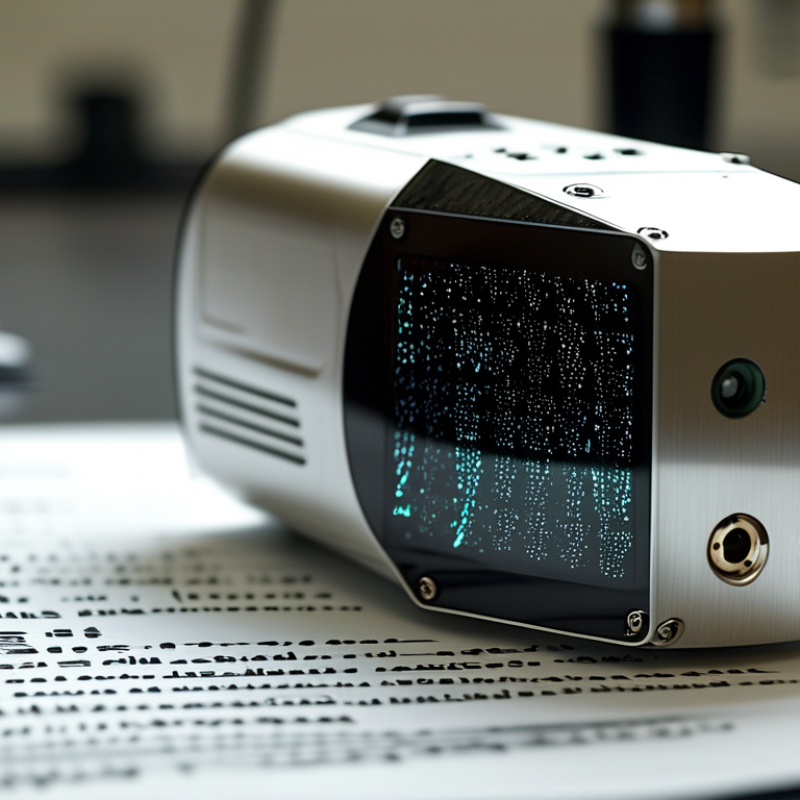
2026 Top Q Switched Nd Yag Laser for Global Buyers

Q-Switched Nd:YAG Laser Fundamentals and Core Operating Principles

Q-Switched Nd:YAG Laser Fundamentals and Core Operating Principles

A Q-switched Nd:YAG laser stores energy, then releases it in an extremely short pulse. This creates high peak power with limited surrounding heat. The 1064 nm wavelength reaches deeper targets, while frequency-doubled 532 nm energy treats more superficial pigment. Pulse duration, fluence, spot size, and repetition rate must work together. Changing one setting changes tissue response.

The mechanism is selective photothermolysis. Pigment absorbs the optical energy, heats rapidly, and breaks into smaller particles through photothermal and photoacoustic effects. The body then clears these fragments gradually. In clinical practice, a conservative test spot is valuable. Skin type, lesion depth, tanning, and medication history can alter outcomes. Real rooms are less perfect.

Fortune Business Insights estimated the global medical laser market at about USD 5.8 billion in 2023, with continued growth projected through 2032. This figure covers many laser categories, not only Q-switched systems. Grand View Research’s 2024 aesthetic lasers analysis also reported a strong growth outlook, reflecting wider demand for controlled light-based procedures. These reports support market interest, but they do not replace device validation. Buyers should examine ISO 13485 manufacturing evidence, electrical safety compliance, calibration records, pulse-energy stability, and operator training. A high peak power number can sound impressive. It may still mean little without accurate beam delivery. Procurement teams sometimes overlook cooling performance and service access. That is a practical weakness worth questioning.

Key Specifications for Comparing Q-Switched Nd:YAG Laser Models

2026 Top Q Switched Nd Yag Laser for Global Buyers

When comparing Q-switched Nd:YAG laser models, start with wavelength options. A 1064 nm wavelength reaches deeper targets, while 532 nm supports selected superficial applications. Check pulse duration, not only maximum energy. Shorter pulses can create sharper photothermal effects, but treatment comfort and skin response still require professional assessment. A high energy rating alone does not prove better performance.

Review fluence, spot size, repetition rate, and beam stability together. Adjustable spot sizes help operators manage small marks and broader areas. Stable output matters during long sessions. Ask for measured specifications, calibration records, and test conditions. Cooling performance also deserves attention. Weak cooling may increase discomfort and downtime. Safety interlocks, emergency stops, protective eyewear guidance, and clear operating software should be standard features. For global purchasing, verify voltage compatibility, language support, service access, spare parts, and training documentation. These details are easy to overlook.

Tips: Request a demonstration using a calibrated energy meter. Compare actual output with the stated value. Inspect the handpiece, foot pedal, screen, and cable for practical durability. Do not judge a model from brochures alone. A compact design may simplify installation, yet it can limit internal cooling space. This is not always obvious. I would also question unclear warranty terms and vague maintenance intervals. Reliable suppliers should explain both strengths and limitations without promising identical results for every user.

2026 Top Q Switched Nd Yag Laser for Global Buyers - Key Specifications for Comparing Q-Switched Nd:YAG Laser Models
Reference Configuration Primary Applications Laser Wavelengths Pulse Duration Pulse Energy Repetition Rate Typical Fluence Range Spot Size Range Beam Profile Cooling Method Optical Aiming Recommended Comparison Point
1064 nm General-Purpose Configuration Black, blue, and dark brown tattoo pigment; selected pigmented lesions; carbon facial procedures 1064 nm fundamental wavelength Approximately 5–10 ns Up to approximately 1,000 mJ per pulse, depending on spot size and repetition rate 1–10 Hz Approximately 1–12 J/cm² 2–10 mm Multimode; profile depends on cavity and handpiece design Air cooling with internally cooled components; optional contact cooling on some systems Red or green aiming beam, commonly around 635–650 nm Check delivered fluence at each spot size rather than maximum pulse energy alone
532 nm Dual-Wavelength Configuration Red, orange, and some yellow tattoo pigment; superficial vascular and pigmented targets 532 nm frequency-doubled wavelength; often paired with 1064 nm Approximately 5–10 ns Typically lower than 1064 nm; commonly up to approximately 300–500 mJ per pulse 1–10 Hz Approximately 0.5–5 J/cm² 2–6 mm Multimode; uniformity varies by optical path and aperture Air cooling; active cooling may be used for the frequency-doubling assembly Visible aiming beam, commonly red or green Verify whether the stated energy applies specifically to 532 nm output
1064/532 nm Clinical Multi-Mode Configuration Professional tattoo removal, epidermal pigmentation, cosmetic carbon peeling, and selected benign lesions 1064 nm and 532 nm selectable outputs Approximately 5–10 ns 1064 nm: up to approximately 1,000 mJ; 532 nm: up to approximately 300–500 mJ 1–10 Hz, with some systems offering higher rates at reduced energy Approximately 0.5–12 J/cm² 2–10 mm interchangeable spot sizes Multimode; some platforms provide beam homogenization Air cooling with temperature monitoring; optional external skin cooling may be available Integrated visible aiming beam Compare wavelength-switching speed, handpiece interchangeability, and output stability
High-Energy Large-Spot Configuration Large tattoo areas, dense pigment, and treatments requiring higher coverage per pulse Usually 1064 nm; 532 nm may be included as an optional channel Approximately 6–10 ns Approximately 600–1,200 mJ per pulse at 1064 nm, subject to spot size and operating frequency 1–5 Hz at high energy Approximately 2–15 J/cm² 4–10 mm, sometimes larger with dedicated optics Multimode; beam divergence should be confirmed in the technical file Air cooling with active thermal protection; room ventilation may be required Visible aiming beam Assess thermal recovery time and energy consistency during repeated high-energy shots
Compact Low-to-Medium Energy Configuration Small tattoo areas, routine cosmetic pigmentation procedures, and clinics with limited treatment volume 1064 nm; 532 nm may be available depending on configuration Approximately 6–10 ns Approximately 100–600 mJ per pulse 1–10 Hz Approximately 0.5–8 J/cm² 2–6 mm Multimode Air cooling Integrated visible aiming beam Compare warm-up time, duty cycle, portability, and service accessibility
Beam-Profile Optimized Configuration Procedures where consistent energy distribution and predictable treatment coverage are priorities 1064 nm and/or 532 nm Approximately 5–10 ns Approximately 200–1,000 mJ per pulse, depending on wavelength 1–10 Hz Approximately 1–12 J/cm² 2–8 mm Top-hat or homogenized profile, if specified by the manufacturer Air cooling with active monitoring; external skin cooling may be used clinically Visible aiming beam Request beam-profile test data, pulse-to-pulse stability, and spot-size calibration information
Multi-Spot Handpiece Configuration Faster coverage of larger treatment fields and standardized spot selection Typically 1064 nm; some systems support 532 nm Approximately 5–10 ns Energy is distributed across multiple microspots; confirm energy per microspot 1–10 Hz Approximately 0.5–10 J/cm² Fixed or selectable multi-spot arrays, commonly 2–8 mm equivalent coverage Fractionated or multi-beam output, depending on handpiece design Air cooling; contact cooling depends on handpiece construction Visible aiming beam or illuminated treatment field Confirm the actual treated area, overlap requirements, and energy calibration for each handpiece
Buyer’s note: The figures above are representative technical ranges for comparing Q-switched Nd:YAG laser configurations, not guaranteed specifications for a particular device. Actual output depends on cavity design, optical components, spot size, pulse frequency, handpiece, calibration method, and local regulatory requirements. Request validated test reports, electrical safety documentation, laser classification, warranty terms, and after-sales service details before purchase.

Top Q-Switched Nd:YAG Laser Categories for Global Buyers in 2026

Top Q Switched Nd Yag Laser Categories for Global Buyers in 2026

Q-switched Nd:YAG lasers are commonly grouped by wavelength, pulse design, and treatment purpose. The 1064 nm category reaches deeper targets and is often selected for tattoo ink, pigmentation, and carbon-based skin treatments. The 532 nm category works closer to the surface and may suit red, orange, or brown pigment concerns. Dual-wavelength systems offer broader flexibility, but they also require stronger operator training and careful parameter selection.

Buyers should compare pulse duration, spot sizes, repetition rates, cooling, handpiece design, and maintenance access. A reliable system should include clear user instructions, traceable quality documents, electrical safety testing, and region-specific regulatory information. In real clinics, small details matter. A heavy handpiece can slow treatment. Poor cooling can reduce comfort. A low purchase price may hide expensive service needs.

Tips: Ask for measured output data, not only advertised power. Request treatment protocols, warranty terms, and spare-part availability before ordering. Check whether local professionals can receive practical training. Do not assume one wavelength fits every patient or skin type. I would also test the interface personally; confusing controls create avoidable mistakes. Some buyers overlook this point. Safety glasses, clinical records, informed consent, and documented maintenance should remain part of daily use.

Safety Standards, Certifications, and Treatment Compliance Requirements

2026 Top Q Switched Nd Yag Laser for Global Buyers

For global buyers, safety begins with documented product compliance, not attractive specifications. A Q-switched Nd:YAG laser should show conformity with applicable medical-device rules in its target market. Ask for evidence supporting IEC 60601-1 electrical safety and IEC 60601-1-2 electromagnetic compatibility. Laser classification should also align with IEC 60825-1 requirements. These documents should identify the exact model, revision, and testing laboratory.

Certification alone does not prove safe treatment. Check whether the manufacturer operates an ISO 13485 quality system and applies ISO 14971 risk management. The user manual should explain wavelength selection, pulse settings, contraindications, cooling procedures, and emergency shutdown steps.

Eye protection must match the operating wavelength and remain available for every person inside the treatment area. Keep it visible. Training records matter too.

Treatment compliance requires local licensing checks, trained operators, patient consent, and traceable maintenance records. A clinic should record skin assessment, test-spot results, settings, treatment response, and adverse events. A small test area can reveal unexpected pigment changes before full treatment. Do not rely on identical settings for every skin type. That shortcut is unsafe. I have seen procurement teams focus heavily on certificates while overlooking service response and calibration intervals. This is an imperfect approach, but it is correctable. Buyers should request independent test reports, translated manuals, warranty terms, and post-market safety updates before purchase.

Purchasing, Installation, Maintenance, and After-Sales Support Considerations

2026 Top Q Switched Nd Yag Laser for Global Buyers

Purchasing, Installation, Maintenance, and After-Sales Support Considerations

Buying a Q-switched Nd:YAG laser requires more than comparing prices and pulse settings. Buyers should verify wavelength options, energy stability, cooling performance, and treatment spot sizes. Ask for test reports, operator manuals, and electrical requirements before signing a purchase agreement. A clear warranty matters too. It should define covered parts, response times, and exclusions.

Installation needs a prepared room with stable power, suitable ventilation, and controlled access. The supplier should provide setup training for licensed and properly trained operators. Check calibration procedures during commissioning. Record the initial output readings and keep them with the service file. Small details prevent expensive confusion later. Local medical-device rules and safety requirements must also be confirmed before operation.

Maintenance should include cleaning handpieces, checking cooling lines, inspecting cables, and reviewing error logs. A simple weekly checklist is useful, although busy clinics may neglect it. That is a real weakness in many maintenance plans. Arrange periodic calibration through qualified technicians, not informal repairs. After-sales support should offer remote diagnosis, spare-parts availability, software guidance, and documented service channels across time zones. Test the support team before purchase by asking a technical question. Slow or vague replies may reveal future problems. Buyers should also request training records and service references from comparable facilities.

Lumenis logo