How to Choose the Best ND YAG Laser Hair Removal Machine?

Choosing an ND:YAG platform is not simply a matter of comparing prices or power ratings. The right device should match the clinic’s services, operators’ training, and clients’ needs. In professional settings, nd yag laser hair removal commonly uses a 1064-nanometer wavelength. Its longer wavelength may be considered for a range of skin tones, but it does not make every treatment suitable or risk-free. A careful consultation and qualified assessment still matter.

This guide explains the practical features to examine before buying, including pulse duration, spot size, energy settings, cooling, and manufacturer support. It also considers usability: Can staff adjust settings clearly, clean the handpiece properly, and follow the supplier’s training guidance? Ask for reliable technical documentation, service details, and evidence supporting the device’s intended use. A polished demonstration is not enough. Still, a neat specification sheet can create false confidence. Real performance depends on device condition, correct settings, treatment technique, and individual response. Hair color and thickness also affect suitability, so expectations should be discussed honestly. No machine replaces professional judgment. The sections ahead offer a grounded way to compare options, identify unanswered questions, and choose a system based on evidence rather than impressive marketing alone.
How to Choose the Best ND YAG Laser Hair Removal Machine?

Understanding How ND:YAG Laser Hair Removal Machines Work

Understanding How ND:YAG Laser Hair Removal Machines Work

ND:YAG systems commonly use a 1064-nanometer wavelength of light. The skin absorbs this light less readily than shorter wavelengths, allowing energy to reach deeper hair follicles. Pigment in the hair absorbs the light and converts it into heat. That heat can damage the follicle and reduce future hair growth. It is a selective process, not instant hair removal.

Hair color and growth stage matter. Dark, coarse hairs often respond better because they contain more pigment. Fine, light, gray, or red hair may respond less consistently. Hair also grows in cycles, so several sessions are usually needed to treat follicles during an active growth phase. Results vary.

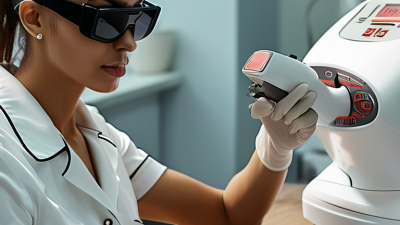
The device’s settings matter, too. Pulse duration, energy level, spot size, and cooling all affect comfort and treatment response. Higher settings are not automatically better; inappropriate energy can injure skin. A trained provider should assess skin tone, hair characteristics, medical history, and recent tanning before treatment. Protective eyewear and a small test area may help reduce avoidable risks. Even with careful planning, outcomes are not perfectly predictable. That uncertainty deserves attention.

Identifying Treatment Needs and Suitable Skin Types

Choosing an ND:YAG hair-removal machine starts with the people it will treat, not its advertised power. The Fitzpatrick scale classifies skin into six phototypes, from very fair to deeply pigmented. An experienced clinician should assess the actual treatment area, since sun exposure can change skin tone temporarily. Small differences matter.

The 1064-nanometre wavelength is less strongly absorbed by epidermal melanin than shorter laser wavelengths. This can make long-pulsed ND:YAG a useful option for darker skin phototypes, but it does not remove the risk of burns or pigment changes. Hair also matters: coarse, dark hair usually responds better than white, grey, red, or pale blond hair. The American Academy of Dermatology advises that laser hair removal commonly takes two to six treatments; the interval and response vary by area and individual. That is an estimate, not a promise.

Before choosing equipment, define the treatment area, expected hair reduction, and client’s history of tanning, skin sensitivity, and previous reactions. Request evidence for the machine’s wavelength, pulse settings, cooling method, and maintenance records. A small test area can help assess comfort and skin response before a larger treatment. It is not foolproof. Reassess settings when the skin is recently tanned or the hair is finer than expected, and refer clients with uncertain skin conditions for qualified medical assessment.

Comparing Wavelengths, Energy, Pulse Duration, and Cooling Systems

When choosing an Nd:YAG hair-removal system, start with its 1064-nm wavelength and the skin types it is intended to treat. Longer wavelengths generally interact less strongly with epidermal melanin than shorter wavelengths, but they do not remove burn risk. A clinical report in Dermatologic Surgery examined long-pulsed 1064-nm treatment using fluences around 50–60 J/cm² and 50-ms pulses. Those figures describe a study protocol, not a universal setting. Skin tone, hair thickness, treatment area, and device design all matter.

Look beyond the headline energy number. Fluence, measured in J/cm², describes energy delivered over an area; pulse duration shapes how quickly it arrives. Coarse hair may need a different pulse profile from fine hair, while excessive fluence can increase discomfort and skin injury. Cooling matters, too. Contact sapphire, chilled air, or cryogen systems can protect the skin surface and improve comfort, but performance depends on consistent contact and maintenance. Small details count.

Ask for published clinical data, adjustable pulse settings, and documented cooling performance. Still, specifications are not the whole story. A trained operator should assess the skin and hair, select conservative settings when uncertain, and use a test spot before treating a larger area. One caveat: published protocols cannot predict every individual response.

How to Choose the Best Nd:YAG Laser Hair Removal Machine? — Comparing Wavelengths, Energy, Pulse Duration, and Cooling Systems
Parameter Typical specification or characteristic What to consider when choosing
Wavelength Long-pulsed Nd:YAG hair-removal systems generally use a wavelength of 1064 nm. At 1064 nm, melanin absorption is lower than at shorter commonly used hair-removal wavelengths, allowing deeper penetration and making this wavelength a frequent option for darker skin phototypes. It still requires appropriate assessment and settings.
Fluence (energy density) Published clinical protocols and device specifications span a broad range; approximately 10–60 J/cm² is a common reference range, not a universal treatment setting. Check the adjustable range, step size, and whether the stated value is measured at the treatment window. The suitable fluence depends on the individual, treatment area, spot size, pulse duration, and device design.
Pulse duration Long-pulsed systems commonly offer pulse durations from roughly 10 to 100 ms, although available ranges vary by device. Adjustable pulse duration gives a trained operator flexibility to match the treatment to the hair and skin characteristics. Do not assess pulse duration separately from fluence and cooling.
Spot size Common treatment spot sizes are approximately 6–18 mm; some systems offer multiple handpieces or spot sizes. Larger spots can cover broad areas more quickly and may deliver light deeper into tissue, while smaller spots can be useful for confined areas. Confirm the usable spot sizes and their compatibility with the available settings.
Repetition rate Many systems offer repetition rates in the range of approximately 1–10 Hz, depending on settings and device design. A higher rate can reduce treatment time, but practical speed also depends on spot size, energy, cooling, and consistent technique. Look for stable output at the settings intended for use.
Cooling system Common approaches include contact cooling, cold air, and, on some systems, cryogen spray. Cooling helps protect the epidermis and improve comfort, but it does not eliminate the risk of burns or pigment changes. Compare cooling consistency, controls, maintenance needs, and compatibility with the handpiece.
Skin tone suitability Long-pulsed 1064 nm Nd:YAG is often selected for a range of skin tones, including darker phototypes, when operated by a qualified professional. Skin tone, recent tanning, medical history, and the treatment area affect risk. Ask about screening procedures, test spots where appropriate, operator training, and protocols for preventing adverse effects.
Hair color and type Laser hair removal works by targeting pigment in the hair. Dark, coarse hair generally responds better than white, gray, blond, or many red hairs. Ask whether the system is suitable for the intended hair and treatment area. Results vary, and laser treatment may not effectively remove hair with little or no melanin.
Output consistency and safety features Features vary. Useful items to review include calibrated energy delivery, clear parameter displays, treatment counters, and built-in safety controls. Request technical documentation, servicing and calibration details, operator training, and applicable regulatory information for the intended country and use.
Important note Ranges above are general comparison references, not a treatment prescription. Specifications vary by device, and treatment settings should be selected by a trained professional following the device instructions and an assessment of the individual.

Checking Safety Features, Certifications, and Operator Requirements

Before comparing ND YAG laser hair removal machines, inspect their safety systems in person. Look for wavelength-matched protective eyewear, a clearly marked emergency stop, secure controls, and functioning cooling. Ask how the device manages pulse duration and energy settings for different skin tones. Small details matter. A cooling tip that feels uneven during a test can affect comfort and treatment consistency. Do not assume a long feature list proves safe performance; request operating instructions and maintenance records.

Check that certification claims apply to the exact model and intended use. Requirements differ by country, so verify documentation with the relevant regulatory authority rather than relying on a sales brochure. Ask for electrical safety records, quality documentation, and any required registration details. A certificate alone cannot replace sound clinical judgment. I would be cautious about choosing a machine based only on its paperwork or price.

Operator requirements matter just as much. Confirm local rules for who may perform treatments, and arrange device-specific training before use. Operators should learn skin assessment, contraindications, eye protection, test spots, and incident response. Keep training records and service logs where staff can access them. Even experienced practitioners can miss a setting when rushed; a written checklist helps, though it is not a substitute for careful assessment.

Evaluating Service Support, Maintenance, and Total Cost of Ownership

How to Choose the Best ND YAG Laser Hair Removal Machine?

Evaluating Service Support, Maintenance, and Total Cost of Ownership

A low purchase price can hide costly service gaps. Ask who performs repairs, where parts are stocked, and how quickly support responds. Get written terms for calibration, software updates, handpiece repairs, and loaner equipment. Downtime counts. A machine waiting for a replacement part cannot serve clients or earn revenue.

The U.S. Department of Energy’s Operations & Maintenance Best Practices Guide (2010) cites typical industrial maintenance estimates of about $18–25 per horsepower annually for reactive maintenance, compared with about $9 for predictive maintenance. These figures are not laser-device quotes, but they show why preventive checks deserve a place in your budget. For an ND:YAG system, request service records covering output verification, cooling performance, safety interlocks, and treatment handpieces. Then compare annual service fees with likely repair costs and lost appointment revenue.

Calculate total cost over the years you expect to use the device. Include consumables, calibration, staff training, cooling-system upkeep, financing, and disposal—not just the invoice. Ask the supplier to define what “routine maintenance” excludes. One uncomfortable detail: downtime estimates are often optimistic. Check the assumptions against your clinic’s booking patterns, and leave room for repairs that arrive at the worst time.

Lumenis logo