How to Buy Alexandrite Laser Hair Removal Machines in 2026?

Buying an alexandrite laser hair removal machine in 2026 requires more than comparing prices and glossy specifications. The 755 nm wavelength can deliver strong melanin absorption and precise treatment, especially for suitable skin and hair combinations. However, performance depends on pulse duration, fluence control, spot size, cooling, and operator training. A powerful handpiece cannot compensate for poor clinical judgment.

Dermatologist Dr. Tina Alster offers a useful reminder: “Lasers are tools, not magic wands.” That principle should guide every purchasing decision. Ask how the machine performs on coarse black hair, finer regrowth, and different skin tones. Request real treatment data, service records, warranty terms, and training details. Examine the cooling system closely. A reliable device should leave the treatment area comfortable, not merely impressive on a brochure.

This guide explains how to evaluate alexandrite laser hair removal systems for professional use in 2026. It covers technical specifications, supplier credibility, maintenance, treatment versatility, and total ownership cost. It also considers an uncomfortable truth: the cheapest machine may become the most expensive choice after downtime, replacement parts, and inadequate support. Still, no checklist can replace hands-on assessment. Test the interface. Review safety controls. Speak with experienced practitioners. Some buying decisions remain imperfect, and that deserves honest reflection. A machine should fit your team, patient population, facility, and long-term treatment goals.
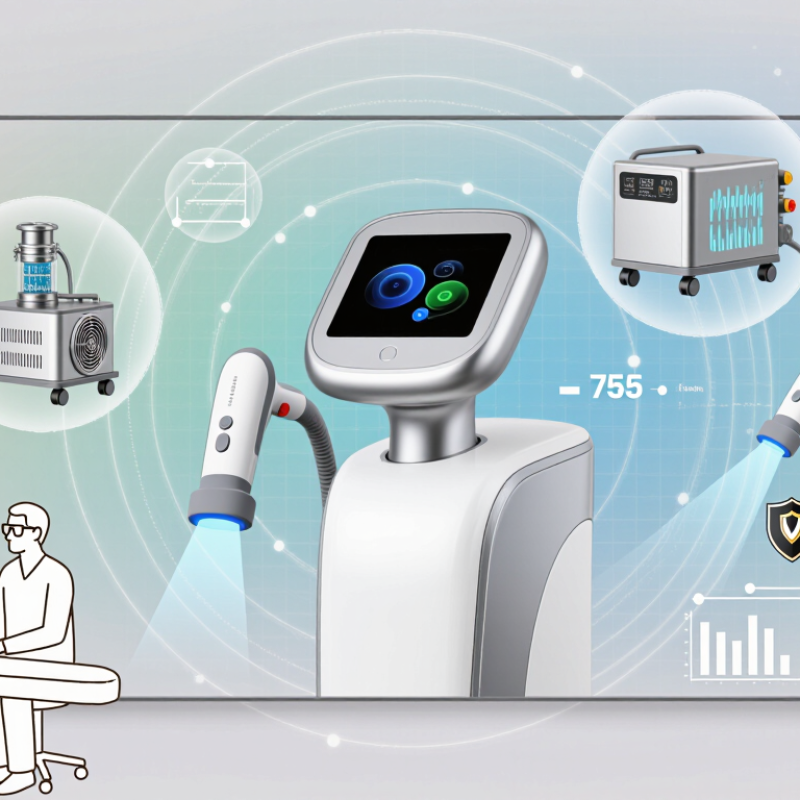
How to Buy Alexandrite Laser Hair Removal Machines in 2026?

Define Alexandrite Laser Technology and Its Hair Removal Applications

Alexandrite laser technology uses a wavelength of about 755 nanometers. Melanin in the hair absorbs this energy and converts it into heat. That heat damages the follicle while limiting exposure to nearby skin. The treatment works best on coarse, dark hair and lighter skin tones. Fine or blonde hair may respond poorly. Results also depend on growth cycles, hormones, and treatment settings.

Alexandrite systems commonly support hair reduction on the legs, underarms, bikini area, back, and face. Many devices include contact cooling or chilled air to reduce discomfort and protect the epidermis. A small test spot is sensible before treating a large area. Darker skin contains more epidermal melanin, which can increase burn or pigment-change risks. A qualified practitioner must assess skin type, tanning, medication, and hair characteristics.

When buying an Alexandrite machine in 2026, examine wavelength stability, pulse duration, spot sizes, cooling performance, calibration records, and training support. Clear operating instructions matter. So does reliable maintenance. A low price can hide expensive downtime. Do not trust claims of permanent removal without qualification; long-term reduction is a more accurate description. No setting suits everyone. Even experienced operators may need to adjust fluence and pulse duration after observing redness, comfort, and hair response. That uncertainty deserves respect.

Assess Treatment Needs, Target Skin Types, and Machine Specifications

How to Buy Alexandrite Laser Hair Removal Machines in 2026?

A practical purchase begins with treatment needs, not attractive specifications. Estimate daily patient volume, treatment areas, hair density, and expected appointment times. Alexandrite systems commonly use a 755 nm wavelength, which often suits lighter skin tones with dark hair. However, skin response varies. Fitzpatrick skin types I to III are generally easier to treat, while type IV requires stricter settings and careful clinical judgment. Ask for adjustable fluence, pulse duration, and spot size. These controls help practitioners adapt treatment to coarse bikini hair, fine facial hair, and different body areas.

Cooling matters. Look for reliable contact or cryogen-assisted cooling, temperature monitoring, and clear maintenance records. A machine should provide calibration documentation, safety instructions, and operator training from qualified professionals. Test the handpiece weight and screen visibility during a simulated session. Small design problems become tiring after twenty treatments. Do not choose solely by power or price. More power does not automatically mean better outcomes. Treatment records, patch testing, and informed consent remain essential.

Tips: Request demonstrations using realistic treatment scenarios. Check service response times and replacement-part availability. Ask how settings are protected from accidental changes. I would also leave room for doubt: sales claims may sound precise, but independent clinical evidence and local safety requirements deserve closer review. A machine that fits your patients is more valuable than one with the longest specification sheet.

Compare Alexandrite Laser Types, Features, and Performance Standards

How to Buy Alexandrite Laser Hair Removal Machines in 2026?

Compare Alexandrite Laser Types, Features, and Performance Standards

Buying an Alexandrite laser requires more than comparing prices and screen designs. A practical evaluation begins with wavelength, pulse control, cooling, and verified output. Single-wavelength 755 nm systems usually target melanin-rich hair efficiently. Multi-wavelength platforms may offer broader treatment flexibility, but their settings can be harder to standardize. The best choice depends on skin types, hair thickness, treatment area, and operator training.

Check the adjustable fluence, pulse duration, spot sizes, and repetition rate. A larger spot can shorten leg treatments, while a smaller spot improves control around the face. Reliable cooling should protect the epidermis before, during, and after each pulse. Look for temperature monitoring, emergency stops, door interlocks, and clear maintenance records. Output stability matters more than impressive maximum power. Ask for calibration reports and independent performance testing.

Performance standards should include electrical safety certification, documented quality management, and local medical-device registration requirements. Request clinical evidence that matches your intended patient population. Darker skin types require careful settings and experienced supervision. A polished interface can still hide unstable energy delivery. That mistake is costly. Speak with a biomedical engineer and a qualified practitioner before purchase. I would also inspect a live demonstration, measure treatment consistency across repeated pulses, and review service response times. Some specifications remain vague, and that deserves a second look.

How to Buy Alexandrite Laser Hair Removal Machines in 2026?

Compare Alexandrite laser types, features, and performance standards using typical starting fluence references for a 755 nm long-pulsed Alexandrite system.

Wavelength

Alexandrite hair-removal systems operate at approximately 755 nm, providing strong melanin absorption for lighter skin types.

Pulse and Cooling

Long-pulse operation, adjustable pulse width, and reliable epidermal cooling are important for balancing efficacy and comfort.

Buying Standard

Check whether the machine supports adjustable fluence, suitable spot sizes, consistent pulse delivery, and validated safety controls.

The chart shows commonly referenced starting fluence ranges in J/cm², not fixed treatment settings. Actual parameters must be selected according to skin type, hair characteristics, cooling performance, spot size, and the device manufacturer's validated protocol. Fitzpatrick skin type VI is generally not an ideal candidate for a 755 nm Alexandrite wavelength because of increased epidermal melanin absorption.

Verify Manufacturer Credentials, Safety Compliance, and After-Sales Support

How to Buy Alexandrite Laser Hair Removal Machines in 2026?

The global laser hair removal market was valued at about US$1 billion in 2023, according to Grand View Research. Growth attracts capable suppliers and careless sellers. Verify the manufacturer’s legal registration, factory address, and certificate scope. ISO 13485 should cover relevant medical-device design or production. Request electrical safety evidence under IEC 60601-1 and laser equipment compliance under IEC 60601-2-22. Confirm local regulatory requirements before importing. A CE mark alone may not equal market authorization in every country.

Safety records matter. The WHO Global Patient Safety Report 2024 estimates that one in ten patients experiences harm in healthcare. This is not a hair-removal statistic, but it shows why risk control cannot be treated as paperwork. Ask for ISO 14971 risk-management documents, eye-protection instructions, cooling-system tests, and fluence calibration records. The serial number should match every document. Small mismatch. Stop and investigate.

Tips: Request a live demonstration using a calibrated energy meter. Check spot size, pulse settings, cooling performance, and emergency shutdown. Ask for operator training, warranty length, spare-part availability, and written response times. Speak with two existing clinics, not only supplied references. One practical lesson is easy to miss: low purchase cost can become expensive downtime. I would also document acceptance testing, because memory becomes unreliable after delivery.

How to Buy Alexandrite Laser Hair Removal Machines in 2026? – Verify Manufacturer Credentials, Safety Compliance, and After-Sales Support

Evaluation Area What to Verify Reliable Evidence or Benchmark Recommended Buyer Action Priority
Laser Wavelength Confirm that the device is an Alexandrite hair-removal system operating at approximately 755 nm. Product technical file, laser source specification, calibration records, and wavelength measurement data. Request the exact wavelength tolerance and verify that the delivered unit matches the approved documentation. Critical
Manufacturer Quality System Assess whether the manufacturer maintains a controlled medical-device quality system. A current ISO 13485 certificate issued by an accredited certification body, with matching legal manufacturer details and scope. Check certificate validity, scope, issuing body, manufacturing site, and whether the certificate covers the relevant device category. Critical
Regulatory Authorization Confirm that the machine is legally marketable in the destination country for its intended use. Valid market authorization, registration, listing, or conformity documentation required by the destination regulator. European sales may require compliance with Regulation (EU) 2017/745, depending on classification and intended purpose. Verify the registration directly through the relevant government or regulatory database whenever available. Critical
Electrical Safety Review electrical, mechanical, and essential-performance safety controls. Applicable test reports referencing IEC 60601-1 and, where relevant, IEC 60601-1-2 for electromagnetic compatibility. Ensure test reports identify the exact model, software version, power configuration, and tested accessories. Critical
Laser Safety Confirm classification, protective housing, interlocks, warning indicators, and emergency-stop functions. Laser safety assessment based on IEC 60825-1 and applicable medical-laser requirements, including IEC 60601-2-22 where relevant. Do not operate the device until protective eyewear, room controls, warning labels, and user training are documented. Critical
Risk Management Determine whether foreseeable risks, misuse, maintenance failures, and adverse treatment effects have been assessed. Risk-management file aligned with ISO 14971, including residual-risk controls and verification records. Ask for a non-confidential risk summary and confirm that contraindications and warnings appear in the user manual. High
Treatment Parameters Review adjustable fluence, pulse duration, repetition rate, spot size, and treatment-area settings. Complete technical specification, operating-range data, user manual, and independent output verification. Compare usable operating ranges rather than maximum marketing values, and confirm that settings are appropriate for the intended patient population. High
Cooling System Verify the cooling method, temperature control, contact surface condition, and fault alerts. Cooling-system specifications, temperature limits, alarm tests, maintenance instructions, and consumable requirements. Test cooling performance during a live demonstration and record recovery time between repeated pulses. High
Calibration and Measurement Confirm how optical output, energy, spot size, temperature, and safety sensors are calibrated. Calibration certificates traceable to recognized national or international measurement standards, with defined intervals. Require calibration records at delivery and include periodic verification in the service contract. High
Clinical and Technical Documentation Check whether intended use, contraindications, warnings, cleaning, maintenance, and treatment guidance are clearly documented. Current user manual, service manual, labeling, training materials, and clinical evaluation or performance evidence where required. Review documents before payment and confirm availability in the required local language. High
Factory and Supplier Verification Validate the supplier’s legal identity, manufacturing location, production capability, and export experience. Business registration, facility address, audit records, production photos or video, certificates, and consistent legal names across documents. Use a video or on-site audit and confirm that the contracting entity is the same entity named in regulatory documents. High
Warranty Coverage Review coverage for the laser source, handpiece, cooling system, power supply, control unit, and labor. Signed warranty terms defining duration, exclusions, shipping responsibility, replacement conditions, and maximum response time. Avoid vague statements such as “long warranty”; require component-level coverage in the purchase agreement. High
After-Sales Response Assess technical support availability, escalation procedures, remote diagnostics, and service coverage in the destination region. Written service-level agreement, support contacts, ticketing process, response targets, spare-parts policy, and training schedule. Set measurable targets in the contract, such as acknowledgement time, troubleshooting time, and replacement-part dispatch time. High
Spare Parts and Consumables Confirm availability, pricing, storage requirements, and expected replacement intervals. Parts list, service pricing, stock location, lead times, compatibility information, and end-of-life notification policy. Calculate total ownership cost over at least three years, including maintenance, cooling materials, shipping, and downtime. Medium
Installation and Training Verify installation requirements, operator qualification, room preparation, electrical supply, ventilation, and laser-safety procedures. Commissioning checklist, installation report, operator-training records, competency assessment, and room-safety requirements. Make final acceptance conditional on successful installation, safety testing, and documented staff training. High
Acceptance Testing Confirm that the delivered machine performs according to the agreed specification. Signed factory acceptance test, site acceptance test, serial-number record, output measurements, alarm test, and accessory checklist. Use a written acceptance protocol before releasing the final payment. Critical
Commercial and Ownership Cost Compare purchase price with installation, training, maintenance, shipping, import duties, consumables, downtime, and regulatory costs. Itemized quotation, payment milestones, delivery terms, service fees, spare-part pricing, and three-year total-cost estimate. Select the supplier with the strongest verified value and compliance profile rather than the lowest initial price. Medium
Procurement note: Regulatory requirements, device classification, licensing, operator qualifications, and permitted indications vary by country and intended use. Verify requirements with the competent authority in the destination market before purchase or operation.

Calculate Total Purchase Costs and Complete the Buying Process

Buying an alexandrite laser hair removal machine in 2026 requires more than comparing the equipment price. Alexandrite systems commonly use a 755 nm wavelength, but performance depends on cooling, pulse control, calibration, and operator training. Grand View Research estimates the global laser hair removal market will expand strongly through 2030, with an annual growth rate above 18%. That growth does not make every quotation good value.

Calculate total purchase cost before signing. For example, a $45,000 machine may require $2,000 for freight, $1,500 for installation and training, and $4,000 for electrical upgrades. Add $3,000 for first-year maintenance and calibration. The estimated first-year cost becomes $55,500, excluding staff wages, rent, insurance, and taxes. At 400 treatments, equipment-related cost equals about $139 per treatment. The calculation is imperfect. Treatment volume may be lower during the first months.

Check the supplier’s service terms carefully. Ask for calibration records, warranty coverage, cooling-system specifications, replacement-part prices, and technician response times. Request a live demonstration using approved safety procedures. The U.S. Bureau of Labor Statistics reports that personal care services continue to employ a large workforce, so training quality directly affects daily operations. Also review local device registration, laser-safety requirements, and insurance conditions before payment. A cheaper machine can become expensive when downtime lasts several weeks. Keep a 10–15% contingency reserve for unexpected installation or service costs.

Lumenis logo