10 Tips for Buying Laser Skin Resurfacing Equipment

Buying laser skin resurfacing equipment is not simply a matter of choosing the newest model. Clinics must match technology with patient needs, treatment depth, skin types, operator experience, and available space. A device may look impressive in a showroom, yet perform poorly when its handpiece feels heavy or its cooling system slows treatment.

Dermatologist Tina Alster, MD, has emphasized, “There is no one-size-fits-all laser.” That principle should guide every purchasing decision. Fractional ablative lasers, non-ablative systems, and hybrid platforms create different results, downtime, and safety requirements. Buyers should examine wavelength options, pulse control, spot size, cooling performance, software safeguards, and published clinical evidence. Ask for hands-on demonstrations, not polished videos.

Look closely.

Training matters as much as hardware. Confirm whether the manufacturer provides practical instruction, maintenance support, calibration, warranty coverage, and responsive technical service. Review local regulatory requirements and facility standards before signing a contract. A lower purchase price can become expensive when replacement parts, consumables, or unexpected downtime appear.

It is also wise to compare total ownership costs over several years. Speak with clinicians using the equipment on real patients, while remembering that every clinic has different workflows. I would not treat a persuasive sales promise as proof. That assumption needs challenging. Strong decisions come from documented evidence, careful risk assessment, and a realistic understanding of who will operate the device. The following ten tips can help buyers evaluate performance, safety, usability, and long-term value with greater confidence.
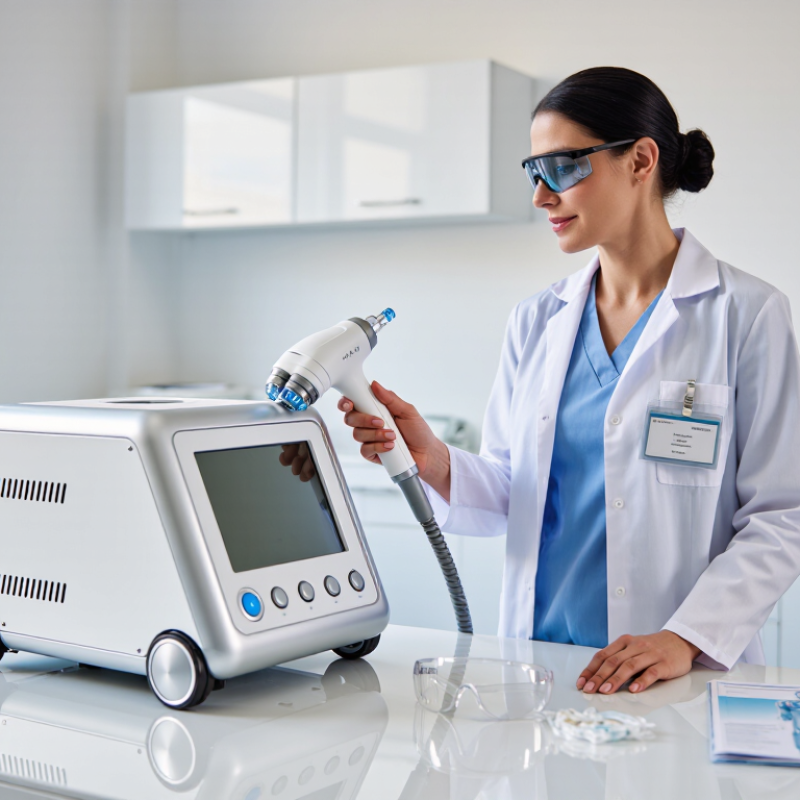
10 Tips for Buying Laser Skin Resurfacing Equipment

Define Treatment Goals and Suitable Laser Types

Define Treatment Goals and Suitable Laser Types

Before comparing laser systems, define the treatment goal in measurable terms. Is the clinic treating acne scars, fine lines, uneven pigment, or deeper photodamage? Each goal requires a different balance of wavelength, energy, penetration, and downtime. The American Society of Plastic Surgeons’ 2023 Plastic Surgery Statistics Report recorded more than three million laser skin resurfacing procedures in the United States. That volume shows strong demand, but it does not justify using one platform for every patient.

Ablative carbon dioxide and erbium lasers remove controlled layers of skin. They may deliver stronger resurfacing, yet healing can take longer. Fractional non-ablative systems create microscopic treatment zones while preserving surrounding tissue. They usually involve less downtime, but several sessions may be needed. Patient skin type matters greatly. Darker Fitzpatrick skin types may face a higher risk of post-inflammatory hyperpigmentation, especially with aggressive settings. Review clinical studies, cooling methods, pulse control, and documented outcomes before buying.

A practical mistake is choosing maximum power first. That approach can increase complications and reduce scheduling flexibility. Instead, match the device to your actual patient mix and staff training. The American Academy of Dermatology recommends individualized assessment and careful sun-protection planning for laser procedures. Ask whether the equipment supports adjustable spot size, fluence, pulse duration, and reliable safety monitoring. Do not overlook service response times. A technically advanced system becomes expensive when it sits unused. Test the handpiece ergonomics, workflow, and treatment visibility before signing a purchase agreement.

Compare Key Technical Specifications and Performance

When buying laser skin resurfacing equipment, compare specifications that predict real treatment performance. Wavelength affects target absorption and treatment depth. Pulse duration influences thermal delivery and tissue response. Short pulses may support controlled ablation, while longer pulses can create broader heating. Numbers need context. A high maximum power does not automatically produce better results.

Check fluence, spot size, repetition rate, and beam uniformity together. Fluence shows delivered energy per area, while spot size affects coverage and precision. A stable beam profile can help maintain consistent treatment across the face. Ask for measured output data, not only brochure claims. I once overvalued peak power. That was a mistake. Practical operating ranges matter more than impressive maximum figures.

Cooling performance deserves close attention. Examine contact cooling temperature, recovery time, and sensor accuracy. Test the handpiece for balance, vibration, and easy adjustment during a simulated session. A clear interface should display energy, pulse settings, and warning messages without confusion. Request calibration records, maintenance procedures, and operator training details. Confirm documented compliance with applicable safety standards. Speak with experienced users about downtime and service response. Their feedback may reveal weaknesses that specifications hide. Test it firsthand. Small design details can affect treatment consistency, workflow, and confidence.

10 Tips for Buying Laser Skin Resurfacing Equipment - Compare Key Technical Specifications and Performance

Tip Evaluation Dimension Key Specifications to Compare Typical Technical Reference Performance and Buying Considerations Verification Method
1 Laser Wavelength Laser medium and absorption profile CO₂: 10,600 nm
Er:YAG: 2,940 nm
CO₂ systems generally provide stronger thermal coagulation and tissue ablation. Er:YAG systems are highly absorbed by water and usually allow more controlled, superficial ablation with less residual thermal injury. Check the wavelength on the technical datasheet and confirm that the delivered wavelength matches the intended treatment indications.
2 Ablative Operating Modes Full-field, fractional, or combination delivery Fractional coverage: commonly 5%–30% per pass Fractional delivery treats microscopic columns while leaving surrounding skin intact, typically supporting faster recovery than full-field treatment. Combination modes increase treatment flexibility. Request a demonstration showing full-field and fractional patterns, including adjustable density and treatment-area controls.
3 Pulse Duration and Pulse Shape Pulse width, super-pulse or continuous-wave operation, pulse stability Pulse duration: microsecond to millisecond ranges, depending on system design Shorter, well-controlled pulses can reduce unnecessary heat diffusion, while longer pulses may create greater thermal coagulation. The appropriate setting depends on wavelength, tissue target, and treatment depth. Compare measured pulse duration, repeatability, and pulse-shape data rather than relying only on the maximum power rating.
4 Energy, Fluence, and Power Range Energy per pulse, fluence, average power, and adjustment increments Fluence is normally stated in J/cm²
Energy and power ranges vary substantially by wavelength and spot size
A broad, finely adjustable range improves suitability for different skin types, anatomical areas, and treatment depths. Small adjustment increments support more consistent treatment planning. Confirm the minimum and maximum values, adjustment resolution, and whether displayed energy is measured at the handpiece or generated inside the console.
5 Scanning and Spot Delivery Spot size, scan area, scan shape, line spacing, dwell time, and pattern control Spot sizes commonly range from sub-millimeter to several millimeters Accurate scanning helps provide uniform coverage and reduces overlap-related hot spots. Adjustable spacing and pattern density are important for balancing efficacy and downtime. Inspect the scan pattern on a test surface and review whether the system records or displays coverage, spacing, and treatment parameters.
6 Cooling Performance Air, contact, or cryogenic cooling; cooling temperature and flow control Cooling should be adjustable and synchronized with laser delivery Effective cooling can improve patient comfort and help limit unwanted epidermal heating. Cooling should support, not replace, correct energy selection and clinical technique. Ask for cooling output data, airflow or temperature specifications, disposable requirements, and evidence of synchronization during scanning.
7 Beam Delivery and Handpiece Ergonomics Articulated arm or fiber delivery, handpiece weight, working distance, aiming beam Aiming beam: commonly visible red or green guide light A balanced handpiece and clear aiming beam can improve operator control, treatment uniformity, and access to curved facial areas. Cable or arm movement should not significantly affect beam alignment. Hold and maneuver the handpiece for several minutes, inspect the working distance, and check alignment at different angles and scan positions.
8 Output Stability and Calibration Energy stability, power drift, calibration interval, and internal monitoring Prefer documented output stability testing and routine calibration procedures Stable output is essential for predictable ablation depth and repeatable clinical results. A high nominal output is less useful if delivered energy changes significantly during operation. Request factory test reports, calibration certificates, service intervals, and independent power-meter verification where available.
9 Safety and Compliance Features Key switch, emergency stop, door interlock, emission indicator, protective eyewear, smoke evacuation compatibility Compliance should match the regulations of the installation country Safety systems should prevent unintended emission and provide clear warnings. Ablative resurfacing also produces a plume, so compatible smoke evacuation and appropriate respiratory protection procedures are important. Review certification documents, electrical safety records, laser classification, user manuals, and the complete risk-control procedure.
10 Usability, Service, and Total Cost Preset management, touchscreen controls, consumables, warranty, training, maintenance, and spare parts Evaluate total ownership cost over at least 3–5 years Simple parameter management and reliable technical support can reduce downtime and training burden. Include maintenance, calibration, disposables, cooling supplies, smoke evacuation, and software support in the budget. Obtain a written quotation covering installation, training, warranty length, response time, preventive maintenance, replacement parts, and consumable pricing.

Note: Technical ranges are general industry reference points. Actual operating limits, treatment depth, recovery time, and clinical performance depend on the device configuration, treatment parameters, operator training, patient characteristics, and applicable local regulations.

Assess Safety Features, Certifications, and Compliance

When buying laser skin resurfacing equipment, safety should be verified beyond a sales brochure. During an in-person evaluation, check the emergency-stop button, key switch, door interlock, and cooling system. These features should respond immediately and remain functional during repeated test cycles. Ask for maintenance records, calibration dates, and service procedures. A device that looks advanced may still be poorly maintained.

Review certification documents carefully. Confirm that the equipment meets applicable medical-device, electrical-safety, and laser-safety requirements in your region. The paperwork should match the exact model, not a similar product. Request test reports, user manuals, risk information, and evidence of quality-control procedures. Compliance markings alone are not enough. Their meaning depends on the issuing authority and local rules. Consult an independent compliance specialist when documents seem unclear.

Staff training is equally important. Operators should understand skin types, treatment limits, eye protection, cooling settings, and emergency responses. Ask whether training includes supervised practice and updated materials. In my experience, rushed demonstrations reveal gaps quickly. I once underestimated how much clear maintenance guidance mattered. That mistake changed my purchasing checklist. Do not ignore small details, such as warning labels, locked settings, or replacement-part availability. A reliable supplier should answer technical questions directly, without promising unrealistic results.

Evaluate Vendor Support, Training, and Maintenance Services

Buying laser skin resurfacing equipment is not only a technology decision. It is a service decision. Grand View Research valued the global aesthetic lasers market at approximately USD 3 billion in 2023, with double-digit growth projected. More devices also mean more complex support needs.

Ask vendors for documented training, not a polished demonstration. Training should cover treatment parameters, skin assessment, contraindications, emergency response, and hands-on practice. Request competency records and refresher schedules. The American Society of Plastic Surgeons’ 2023 procedural statistics placed skin resurfacing among widely performed minimally invasive treatments. That demand makes practical training essential, especially for new operators.

Maintenance details deserve equal attention. Ask how quickly technical support responds, where repairs occur, and whether loaner equipment is available. Review preventive-maintenance intervals, calibration procedures, and replacement-part availability. A service contract should define response times in writing. “Fast support” is too vague.

Request anonymized service data, if available. Useful measures include first-response time, average repair time, repeat-failure rates, and training completion rates. These figures reveal more than sales testimonials. The FDA’s MAUDE database also shows why incident documentation matters, although it cannot determine actual device-failure rates. A checklist can still miss workflow problems. Test the support process before purchasing: send a technical question and observe the response. If answers arrive late or remain unclear, the equipment may become an expensive interruption.

10 Tips for Buying Laser Skin Resurfacing Equipment: Service Evaluation Priorities

When comparing laser skin resurfacing equipment, evaluate more than the device specifications. This suggested 100-point framework gives the greatest emphasis to vendor support, operator training, preventive maintenance, and repair responsiveness.

Calculate Total Ownership Costs and Purchasing Value

The purchase price is only the visible part of laser resurfacing equipment. Calculate installation, room preparation, staff training, financing, consumables, maintenance, insurance, and software fees. The American Society of Plastic Surgeons’ 2023 procedural statistics reported more than three million laser skin-resurfacing treatments in the United States. That demand does not guarantee a profitable device.

Build a five-year ownership model. Divide the total cost by realistic treatment capacity, not the manufacturer’s maximum claim. Include technician wages, calibration, handpiece replacement, and downtime. A service contract may look expensive, yet one delayed repair can cancel several treatment days. Ask for documented response times, parts availability, and preventive-maintenance records. Request written estimates. Verbal promises age badly.

Compare purchasing value through cost per completed treatment. For example, a device costing 120,000 dollars may require another 30,000 dollars for installation, training, and the first service period. At 1,000 completed treatments, the equipment portion equals 150 dollars per treatment before labor and rent. That calculation exposes weak assumptions. A spreadsheet can still lie. Test it with conservative utilization, seasonal demand, and a 10 percent downtime allowance. The GlobalData Medical Devices reports and the American Society of Plastic Surgeons’ statistics can support market and utilization checks, but neither replaces local financial records. Evaluate clinical versatility, energy efficiency, warranty coverage, and staff confidence together. The cheapest quote is rarely the cheapest ownership path.

Lumenis logo