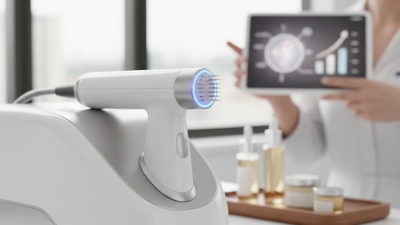
China’s co2 fractional laser industry is attracting global attention from dermatology clinics, medical distributors, and aesthetic technology investors. Demand is supported by growing interest in scar revision, wrinkle reduction, uneven pigmentation, and controlled skin resurfacing. The ISAPS Global Survey 2023 recorded more than 19 million non-surgical aesthetic procedures worldwide, showing the scale of the broader market. However, procedure growth does not automatically prove product quality.
This guide introduces China’s top 10 CO2 fractional laser manufacturers through a practical, evidence-based lens. It considers manufacturing experience, clinical application support, product certifications, export history, research capability, and after-sales service. Reports from Grand View Research and Fortune Business Insights indicate continued expansion in aesthetic laser markets, although their forecasts differ because they use different market definitions. That difference deserves attention.
Reliable evaluation goes beyond polished websites. A strong manufacturer should explain wavelength, pulse duration, spot size, cooling methods, scanner control, and maintenance requirements clearly. It should also provide traceable quality documentation, risk-management records, and relevant compliance evidence, such as ISO 13485 systems or applicable IEC 60601 testing. Details matter.
Real performance depends on more than the laser source. Operator training, patient assessment, treatment protocols, and local regulations also influence outcomes. Some suppliers appear impressive but offer limited clinical support. Others have less marketing visibility yet demonstrate stronger engineering discipline. No ranking is perfect.
The following overview aims to help hospitals, clinics, and distributors compare suppliers responsibly. It does not replace regulatory verification, professional training, or clinical judgment. Use the list as a starting point, not a final decision.
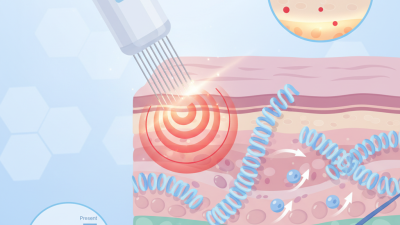
A CO2 fractional laser is an ablative skin-resurfacing device using a 10,600-nanometer wavelength. Water absorbs this energy strongly. The beam therefore heats and vaporizes microscopic columns of skin. Untreated skin remains between these columns, helping the surface recover faster than fully ablative treatment. It is a controlled injury, not a simple light treatment.
The mechanism has two visible stages. First, thermal energy removes tiny areas of epidermis and part of the dermis. Then, surrounding tissue forms a healing bridge. Fibroblasts produce new collagen during remodeling, which may soften wrinkles, acne scars, and uneven texture. A 2023 American Society of Plastic Surgeons statistics report recorded more than three million U.S. skin-resurfacing procedures, showing sustained clinical demand. However, that figure includes several technologies, not CO2 fractional lasers alone.
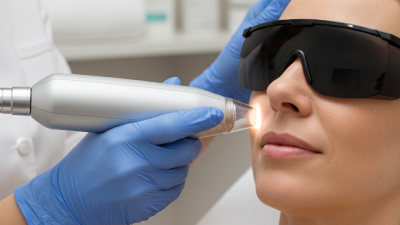
The numbers do not tell the whole story. Skin tone, scar depth, pulse energy, and cooling all affect results. The model is clean; real skin is not. A professional assessment should review previous pigmentation changes, active irritation, medications, and healing history. Peer-reviewed clinical literature describes redness, swelling, crusting, infection, and post-inflammatory hyperpigmentation as possible risks. Settings should be selected by qualified medical professionals, with eye protection and documented aftercare. One practical detail matters: a treated cheek may feel hot for hours, while the surrounding skin looks relatively normal. Recovery is uneven, and improvement often develops gradually over several months.
China has become a major CO2 fractional laser manufacturing hub through dense medical-device supply chains. Optical components, control systems, cooling units, and metal housings can often be sourced within the same industrial region. This shortens development cycles and supports practical customization. Experienced engineering teams also improve energy stability, pulse control, handpiece design, and user interface testing. These details matter in clinical settings.
The top 10 manufacturers should not be judged by factory size alone. Reliable evaluation includes quality management, production traceability, electrical safety testing, training support, and after-sales response. Export experience is useful, but it does not replace independent verification. No factory is perfect. Some suppliers communicate well but provide limited technical records. Others offer polished equipment but weak service after delivery. That is where careful buyers must reflect.
Tips: Request test reports, operating manuals, sterilization guidance, and service timelines before ordering. Ask how each unit is calibrated and recorded. Review sample packaging and inspect serial-number tracking. A video call with the production team can reveal more than a sales brochure. Also, confirm that the device fits local professional requirements and authorized clinical use. Lower pricing may look attractive, yet unstable output or delayed spare parts can increase long-term costs. Short-term savings are not always real savings.
China’s CO2 fractional laser sector serves clinics, hospitals, and export distributors. Market reports suggest continued growth. Fortune Business Insights estimated the global medical laser market at about USD 4.8 billion in 2023, with strong expansion expected through 2032. However, market size does not prove manufacturing quality. A reliable evaluation starts with factory evidence, not catalog photographs.
Check the manufacturer’s ISO 13485 certification, quality-control records, and product registration status. Ask for the exact certificate number and verify its scope. Review IEC 60601-1 electrical safety testing and ISO 14971 risk-management documentation.
Request a production video showing laser calibration, handpiece inspection, and final testing. Small details matter. Does each unit receive an output-power test? Are calibration records traceable to a reference instrument? These answers reveal operational maturity.
Clinical performance requires deeper scrutiny. Ask for pulse duration, spot-size accuracy, energy stability, cooling design, and repeatability data. Independent testing is more persuasive than internal claims.
Grand View Research has reported rising demand for aesthetic laser systems, but growth can also attract inexperienced suppliers. That is worth remembering. Request user feedback from hospitals, service records, spare-parts availability, and response times.
A manufacturer offering only a low price may be economical initially, yet downtime, unstable energy delivery, or weak training can increase total ownership costs. I would also test sample units under repeated operation, because one successful demonstration proves very little.
China Top 10 CO2 Fractional Laser Manufacturers
Profiles of China’s Top 10 CO2 Fractional Laser Manufacturers
China’s leading CO2 fractional laser manufacturers differ in engineering depth, clinical support, and export readiness. This profile reviews ten suppliers through practical criteria: laser stability, pulse control, scanner accuracy, cooling design, documentation, and after-sales service. The group includes manufacturers focused on dermatology systems, compact clinic platforms, hospital equipment, and private-label production. Some offer adjustable energy, dwell time, and scanning shapes. Others emphasize fast treatment workflows and simpler interfaces.
Market demand remains strong. The ISAPS Global Survey 2023 recorded over 19 million surgical aesthetic procedures worldwide, while non-surgical treatments exceeded 20 million. Grand View Research also identifies aesthetic lasers as a growing medical-device segment through 2030. These figures support continued investment, but they do not prove every supplier provides equal clinical value. Public test data is often limited. That is an important weakness.
Tips: Request fluence accuracy records, pulse-width specifications, scanner repeatability tests, and service-response terms. Review electrical safety documents and local registration requirements before purchasing. Ask for treatment protocols, training evidence, and maintenance photographs. A low quotation may hide costly handpiece replacement or weak technical support. In my view, factory visits remain useful, yet they can still show only a carefully prepared moment. Pair them with customer references and independent verification.
The following anonymized, non-ranked profiles summarize commonly documented product configurations and manufacturing orientations in China’s CO2 fractional laser sector. Company names, brands, and unsupported manufacturer-specific claims have been intentionally omitted. Actual specifications and regulatory status must be verified for each individual model.
| Profile | Typical Manufacturing Focus | Laser Wavelength | Fractional Delivery Method | Common Clinical Applications | Cooling Configuration | Typical Control Features | Compliance Information |
|---|---|---|---|---|---|---|---|
| Profile 01 | Aesthetic dermatology systems for clinics and medical spas | 10,600 nm CO2 | Scanning fractional microbeam pattern | Acne scars, photoaging, fine lines, uneven skin texture | Integrated air cooling is commonly available | Adjustable density, scanning area, pulse energy, and dwell time | Model-specific verification required |
| Profile 02 | Hospital-oriented platforms with broader treatment controls | 10,600 nm CO2 | Computer-controlled fractional scanning | Resurfacing, scar revision, benign epidermal lesions, selected gynecological applications | Air cooling; external cooling may also be used | Preset protocols, adjustable spot density, repeat control, and footswitch operation | Registration varies by destination market |
| Profile 03 | OEM and ODM platforms for overseas distributors | 10,600 nm CO2 | Scanner-based fractional ablation | Skin resurfacing and scar-management procedures | Built-in air cooling on many configurations | OEM interface, multilingual software, parameter presets, and service diagnostics | Documentation depends on the private-label model |
| Profile 04 | Compact systems designed for small treatment rooms | 10,600 nm CO2 | Fractional scanner with selectable treatment shapes | Localized resurfacing, wrinkles, pores, and superficial scars | Integrated air cooling is typical | Touchscreen operation, compact footprint, and preset treatment modes | Electrical and medical approvals are model-specific |
| Profile 05 | High-throughput systems for dermatology and cosmetic centers | 10,600 nm CO2 | Large-area fractional scanning | Full-face resurfacing, texture improvement, and scar treatment | Air cooling with optional external patient cooling | Large scan fields, repeatable presets, and programmable energy-density settings | Confirm local approval before clinical use |
| Profile 06 | Multi-function platforms combining fractional and conventional modes | 10,600 nm CO2 | Fractional scanner plus selectable continuous or ultrapulsed delivery | Resurfacing, tissue vaporization, lesion treatment, and scar revision | Air cooling is common; protective eyewear remains necessary | Multiple operating modes, pulse-width adjustment, and scanner calibration | Indications must match the approved labeling |
| Profile 07 | Research, teaching, and clinical-training equipment | 10,600 nm CO2 | Programmable fractional scanning | Dermatological research, procedural training, and controlled resurfacing studies | External or integrated cooling depending on configuration | Fine parameter adjustment, data logging, and repeatable scan patterns | Research use and clinical use may have different requirements |
| Profile 08 | Private-label export systems for regional distributors | 10,600 nm CO2 | Scanner-defined fractional microcolumns | Cosmetic resurfacing and acne-scar procedures | Integrated air cooling is frequently specified | Custom housing, multilingual display, adjustable density, and remote service support | Importer and distributor obligations may apply |
| Profile 09 | Premium systems emphasizing ergonomics and workflow integration | 10,600 nm CO2 | Precision fractional scanning with selectable patterns | Facial rejuvenation, texture correction, and scar remodeling | Air cooling with compatibility for separate cooling devices | Graphical treatment planning, memory settings, and handpiece ergonomics | Performance claims require product-level evidence |
| Profile 10 | Value-oriented systems for general aesthetic practices | 10,600 nm CO2 | Basic fractional scanner with selectable density | Fine lines, superficial scars, pores, and skin-texture improvement | Integrated air cooling is commonly offered | Essential energy, density, pulse, and scan-area controls | Verify safety, training, and market authorization |
China Top 10 CO2 Fractional Laser Manufacturers
Comparing China’s leading CO2 fractional laser manufacturers requires more than checking power ratings. Global buyers should examine product design, certification evidence, and service support together. A practical system may offer 10,600 nm output, adjustable pulse duration, multiple scanning patterns, and stable energy delivery. Handpiece weight also matters during long clinical sessions. Integrated cooling and smoke evacuation can improve operator comfort and treatment control. Ask for test videos, technical drawings, and recent production records. Marketing images are not enough.
Certification claims require careful review. Confirm whether the device has ISO 13485 manufacturing controls, electrical safety testing, and market-specific registration. CE requirements may differ by destination and product classification. FDA pathways also require direct verification, not copied certificates. Request certificate numbers, issuing bodies, validity dates, and matching model names. Service comparison is equally important. Review warranty coverage, spare-part availability, software support, remote training, and response times. A low purchase price can become expensive when a scanner fails.
Tips: Request a live demonstration. Test both deep and light settings. Ask how calibration is documented. Clarify who handles technical issues in your time zone. I would not treat a certificate logo as proof of quality. Some brochures overstate performance, and buyers may overlook maintenance costs. A written service agreement creates better accountability. Yet even that needs review, especially when local support is limited.
Product, Certification, and Service Evidence Checklist for Global Buyers
This non-company-specific benchmark summarizes the main evidence categories global buyers should verify when comparing CO2 fractional laser suppliers. Product checks include wavelength, pulse control, spot size, and cooling. Certification checks reference commonly requested frameworks such as IEC 60601-1, IEC 60601-1-2, ISO 14971, ISO 13485, and applicable market authorization. Service checks cover training, warranty, spare parts, and technical support.